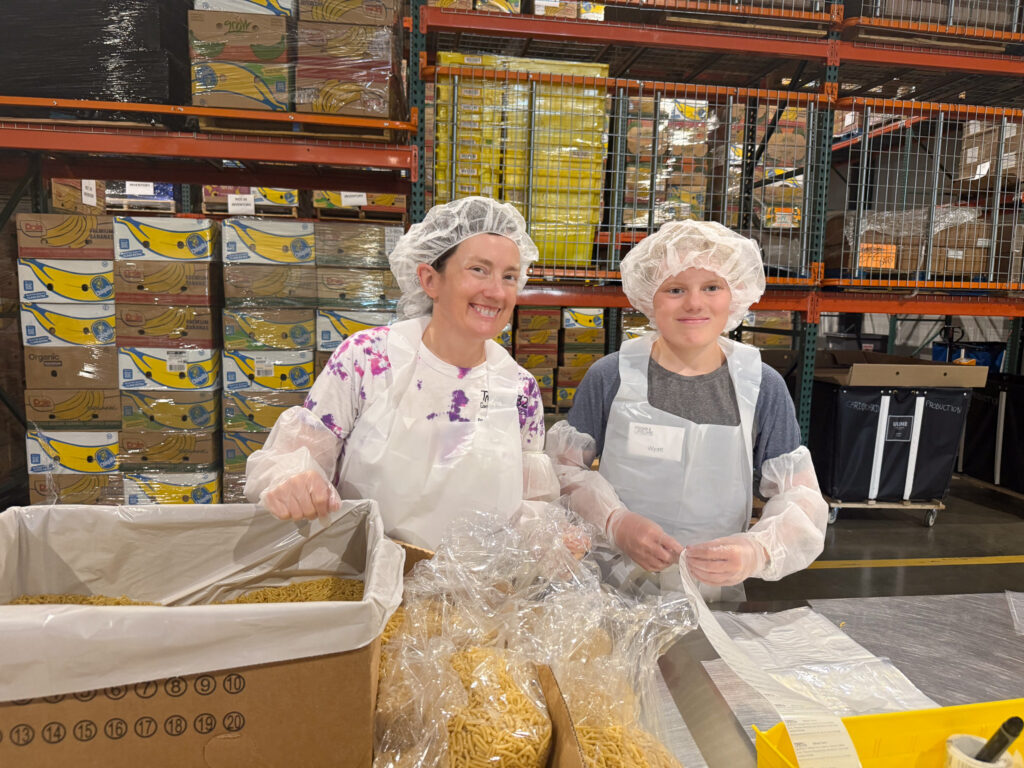
Volunteer Spotlight: Wyatt and Teresa Sherwood
This month we sat down with mother-son super duo Teresa and Wyatt Sherwood, who have been coming in regularly to volunteer over the past year. Wyatt set a goal to contribute 100 volunteer hours a year in high school, and just completed his first 100 volunteer hours for his freshman year. Volunteering at both Food Lifeline and the Rainier Valley Food Bank they are able to see the whole circle of care. We’re grateful for their dedication to our mission, and the many ways they nurture and support our community.
For Teresa and Wyatt Sherwood, volunteering is a way of life. Teresa, a multilingual teacher at a Seattle area school, has been taking Wyatt to volunteer at the Rainier Valley Food Bank since he was four years old. When Wyatt started high school this year, he decided to expand his volunteering. His high school requires 40 volunteer hours a year, but offers a Wolverine Guard Award for volunteering 100 hours a year. Using the award as a framework, Wyatt decided to set the goal of reaching 100 hours each year, and just hit that milestone for his freshman year.
Teresa and Wyatt still volunteer at the Rainier Valley Food Bank as well, and had just been delivering food door to door to people on the day I interviewed them. Volunteering at both Food Lifeline and a local food bank enables them to experience the full circle of care, or as Wyatt says, “the full ecosystem.”
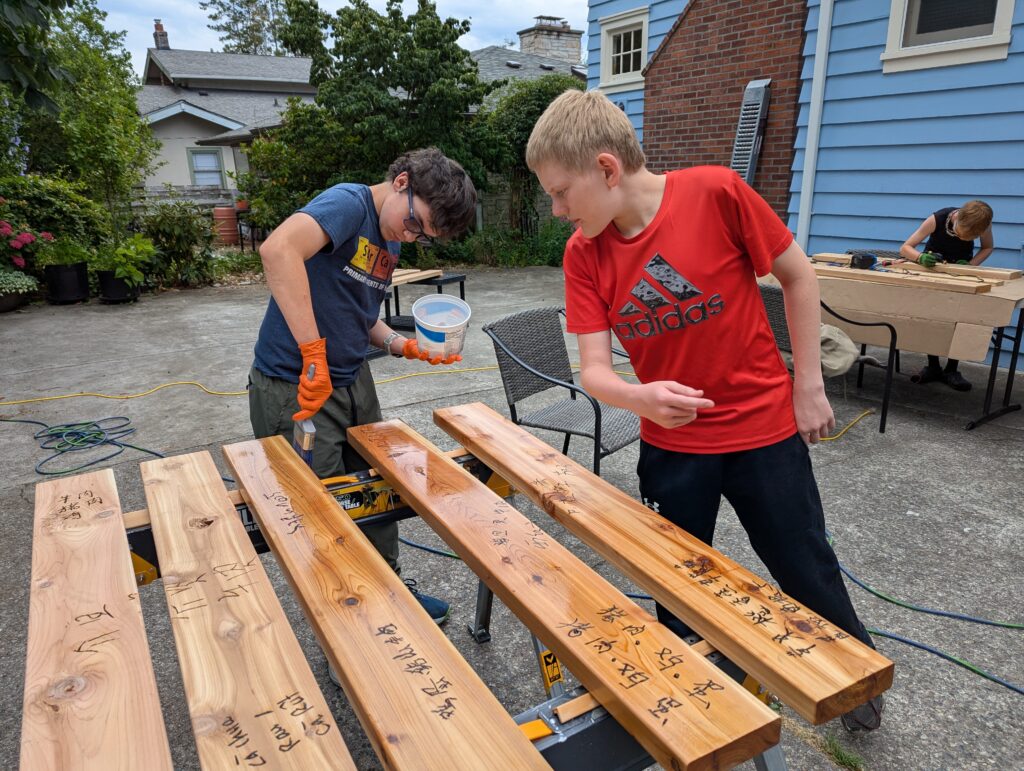
Wyatt, who is active in scouting, is also building a herb planter box for Rainier Valley Food Bank as his Eagle Project. He decided on the project as herbs are something that all cultures use and he wants everyone to be able to access a variety of fresh herbs, not just “limp parsley.” The Scouts etched the Rainier Valley Food Bank guests’ favorite foods, herbs, and spices on the wood in their home languages.
Wyatt has even brought his troop with him to volunteer at Food Lifeline, which helped them work toward a service badge.
“Food insecurity is a really big issue in our society that we have to fight!” says Wyatt.
“How can we expect people to reach their top tier when on the first level they are without food?”
-Wyatt
Wyatt and Teresa also value the connections they’ve made through their commitment to this work. They’ve formed close relationships with other volunteers, community members, and staff.
“It’s great to see such a young individual like Wyatt be dedicated to the cause that we all should be dedicated to,” said Volunteer Production Coordinator Alexius, who has gotten to know Wyatt and Teresa through their many hours volunteering in the warehouse. “For Wyatt to show up all the time with his mother and put his best foot forward It really makes me appreciate not only their time, but I recognize their dedication to this fight as well.”
Teresa thinks Food Lifeline does a great job connecting the work they do in a single shift to the final impact. She appreciates seeing the concrete impact of their volunteering team at the end of each shift, something that’s harder to quantify in her regular job. Wyatt also likes looking around after a shift and seeing that all the rice from the pallets on the shelves has been broken down into usable serving sizes, and recognizing their progress.
They also find the work fun and have enjoyed enjoyed gamifying it to some extent. When they weigh rice, if they get it exactly to the right weight on the first try, they will all cheer. Sorting rice and other dry goods like this is one of Wyatt’s favorite volunteer tasks and he loves teaching others how to bag. He adds with a laugh that he’s become very dexterous volunteering at Food Lifeline.
He’s also enjoyed learning about all the “behind the scenes” tasks he wasn’t originally aware of, like wrapping and moving pallets. He now sees the multitude of people and jobs involved in distributing food out to the community.
Teresa says it feels good to think about the people receiving the food. Teaching at a Title 1 school where many students are experiencing food insecurity, she understands the impact that can have on development. She knows that by helping to provide food to the community, families can really thrive.
“It’s nice to be part of the solution, so that families can focus on loving their kids.”
-Teresa
She says that it’s important to ask, “What does it mean to be part of community?”
She believes that when people support their communities, the stronger those communities become. Stronger communities can better support their members.
“It becomes an outstanding feedback loop,” says Teresa.
She adds that they’ve also met some truly amazing people volunteering.
To any one considering volunteering, they say absolutely give it a try, as you will likely find out it’s pretty fun. And, the more people we have working on this important issue, the better able we are to really have an impact.
As Wyatt says, “We should not put a band aid on this issue but get to the root cause.”