Volunteer Spotlight: Len Kannapell
Connection, care, and conservation are three of Len Kannapell’s core values, and what led him to a lifetime of volunteering. A member of the Social Justice Commission at St. Benedict’s Church for 20 years, his involvement in their Hunger Project eventually brought him to Food Lifeline, where he now leads a regular group of volunteers.
When he first joined the Hunger Project at St. Benedict’s, he discovered Food Lifeline was in need of volunteers. Len started organizing a group to go to the warehouse regularly to help, a commitment that has continued for more than 12 years. Over that time, the group has grown significantly.
Talking to church members at coffee hour and in social settings, he realized how many people, like him, really wanted to help.
“You kind of get the sense, everybody’s in the same boat. They all want to do something.”
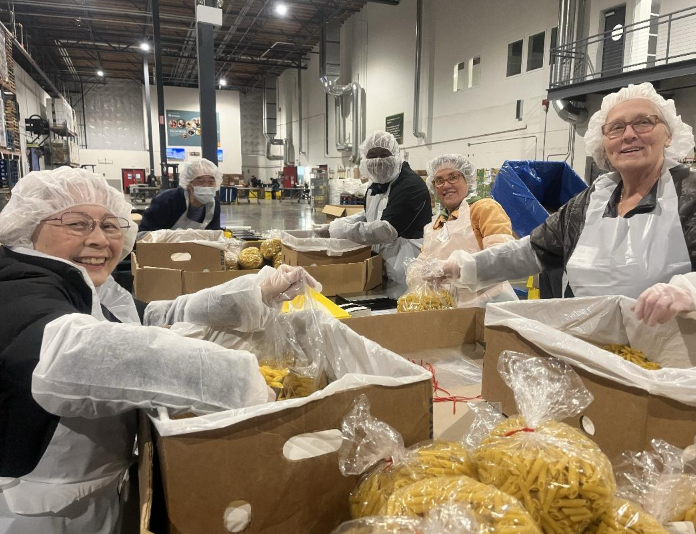
Every other month on a Wednesday evening, one of the members pulls their Chevy Tahoe up to St. Benedict’s in Wallingford, and the group of volunteers pile in and carpool to Food Lifeline. They’ve sorted everything over the years, from canned salmon to macaroni to watermelon.
The sessions are a way for members to get to know each other better while giving back.
“It makes people feel really good to feel connected,” said Len. “I see people when we walk out. Especially people who hadn’t been there before and they’re just beaming. I’ve never seen a single person who said, yeah, I don’t think I’m gonna come back. Everybody wants to come back.”
“People have a hunger for connection today… They want to talk face to face as much as they can.”
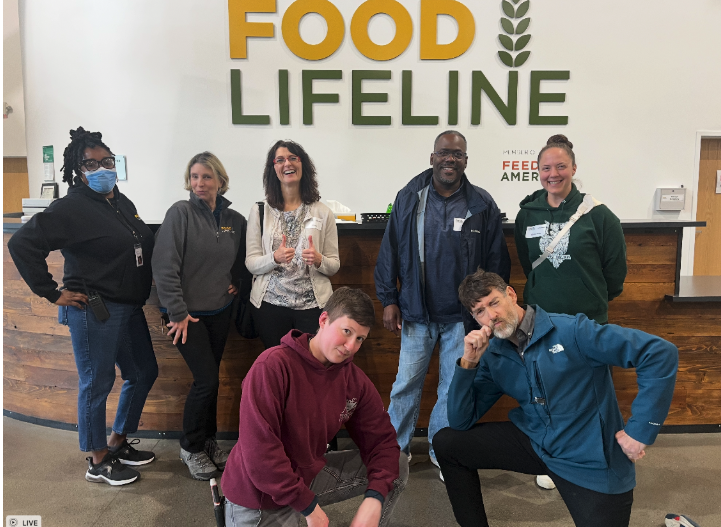
The session are also just a lot of fun for the group.
Len says the staff always has some good disco or 70s and 80s music going that gets everyone energized and interacting, even people who are meeting for the first time.
“Sometimes you’re working with people and they’re being real quiet, but the music helps get people going, and gives them something to talk about.”
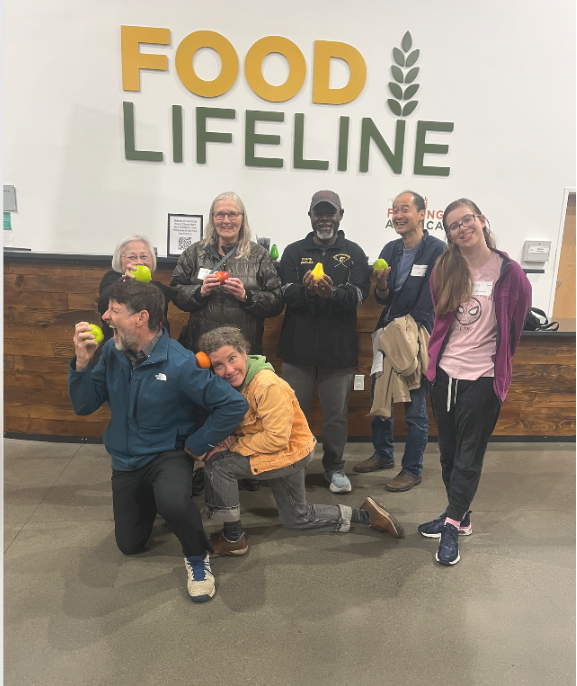
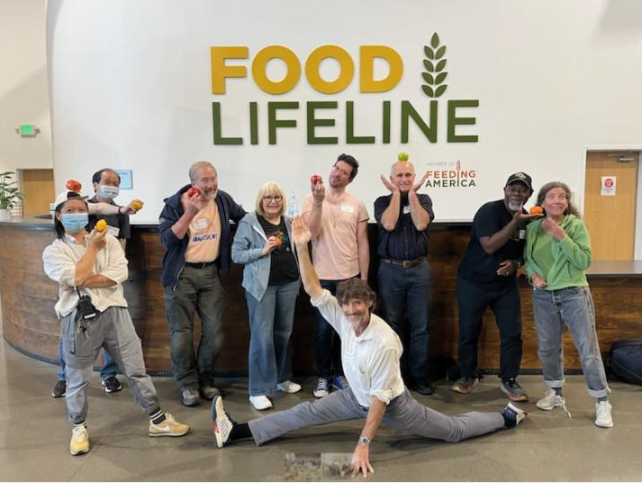
And Len makes sure that every time they volunteer they get a picture inside at the warehouse with the big Food Lifeline logo in the background and then have everybody does something kind of goofy to make it fun. He uses these photos in emails and church bulletins to encourage more people to volunteer.
A big part of Len’s role is spreading the word about food insecurity and expanding their volunteer group. He’s involved with three churches that are part of the partners in the gospel, and has gone to talk to people at each church about Food Lifeline’s mission and to invite members to join the volunteer group.
“I never really thought about myself as a leader at all until recent years,” said Len. “I just go and try to set an example.”
His hard work and commitment have paid off. He’s brought many members into volunteering over the years and currently has a list of about 60 people that he regularly emails to join volunteer sessions.
He’s motivated by a calling to make a difference in the world around him, especially when it comes to hunger.
“This problem is out there. And it’s going to stay out there and it’s still going to be here. But that doesn’t mean that I can’t get involved and shouldn’t try. So because of that mantra, this is why we have to keep doing this because why would I not want to help out?”
A 1998 trip to Nepal proved transformative, revealing to him the remarkable spirit and resilience of people living through significant hardships. He’s taken that as a life lesson.
“I want to be part of something to make a difference,” said Len.
Helping to ensure food is used efficiently is also a natural throughline to his career working in the conservation division at Seattle City Light.
“I think about using things more thoughtfully,” said Len. “We’re all part of the problem, but we’re also part of the solution.”
He loves that his work at Food Lifeline helps to reclaim unsold produce that might have been thrown out, while also serving as an opportunity for people to connect.
“It’s a win-win for everybody,” said Len. “And it makes me feel like I’m engaged in making a difference.”
He finds hope in all the groups doing amazing work in the Seattle area to support food security, such as the Ballard Food Bank and Operation Nightwatch, among others.
“When you see the giving spirit of these folks and even the folks who are being helped, it’s pretty cool to see. It seems it’s this fragile web, but people are out there doing things. There’s really good stuff happening every day.”