


Volunteer Spotlight: Frank Robinson
Longtime Volunteer Frank Robinson’s life has always been all about relationships. It’s what drew him to a long career as a mental health therapist. And it’s what’s drawn him to a life of connection and service, and in turn, to Food Lifeline.
“As long as I can remember, my life has been about making a difference,” says Frank.
In addition to volunteering once a week at Food Lifeline, Frank works two days a week in his private counseling practice, and coaches kids in golf once a week. He also paints, plays piano, plays golf, gardens, and has been part of a men’s group that has been meeting since 1977. And he has published a book, and regularly writes and shares articles on his blog.
He believes we vote everyday for the kind of world we want to live in though our actions and way of being.
“It’s not just voting, like in a ballot. It’s how we walk down the street and how we relate to each other, whether we’re making a positive difference in the world. We’re all voting, whether we’re aware of it or not.”
He lives this idea in real time, keeping bottles of water in his car with $20 bills rubber banded to them that he can hand out. If he’s walking on a beach, he’ll bring a garbage bag to pick up litter. And he feels a calling to help others engage in this way.
“It matters how we walk through the world. There are a lot of ways that we can make a difference.”
He discovered Food Lifeline years ago, when he was volunteering with Northwest Farmers, and was going to stores collecting food. A fellow volunteer said they sometimes went to Food Lifeline to get food. Learning it was the food bank’s food bank, he made a call and was told to come on down to volunteer. He volunteered regularly with Food Lifeline for a few years, and was then was recruited to help run Shop the Dock.
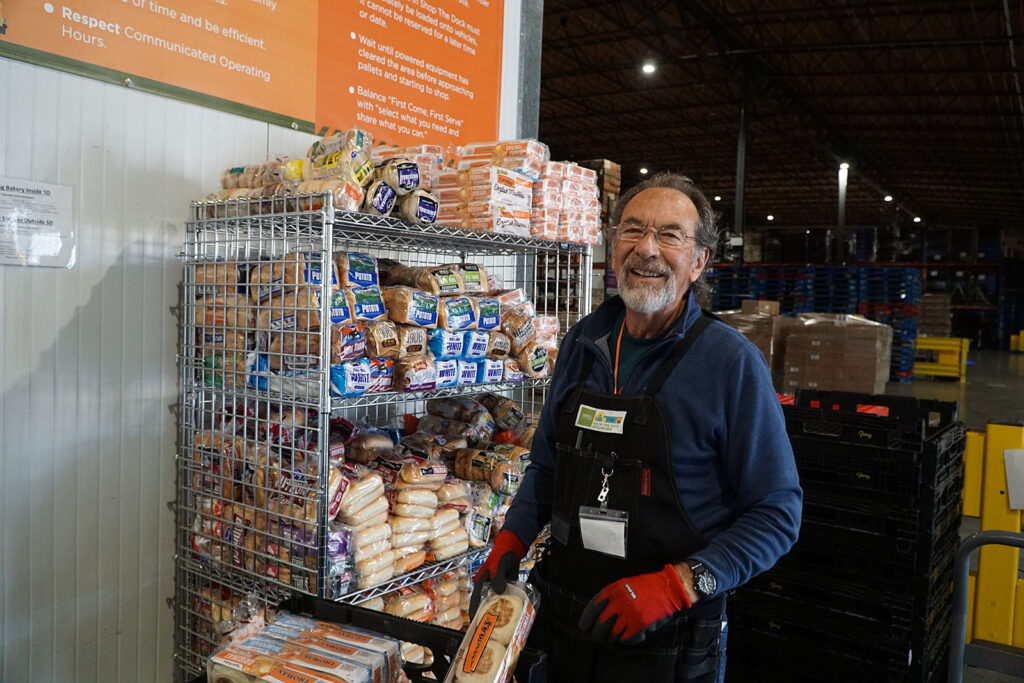
An avid athlete his entire life, Frank loves the physicality of working in Shop the Dock, sometimes racking up 15,000 steps in a day, and lifting heavy food items up and down.
“I like grunt labor!” says Frank. “I love working.”
His very first job was picking strawberries when he was four. Throughout his life he worked as a carpenter, pipefitter, and longshoreman, and spent time doing everything from selling doughnuts and digging diches, to loading bombs for liberty ships in Bangor. Working in Shop the Dock reminds him of his time working in a grocery store in high school, and he still enjoys arranging the bread and bakery items and making sure everything is presented as neatly as it would be in a grocery aisle.
But as a people person, his very favorite part of volunteering is getting to know the other volunteers and staff.
“Everybody here has just been really delightful to work with. The relationships here are what it’s really about.”
He’s also been struck by the appreciation everyone shows at the warehouse.
“I couldn’t move a box without somebody saying, thank you. The people here are so expressive in their gratitude for all the volunteers,” says Frank. “This is a wonderful place to volunteer.”
He says there is a beautiful reciprocal circle of gratitude going, with staff thanking him, people coming in from food banks thanking him, and him thanking others.
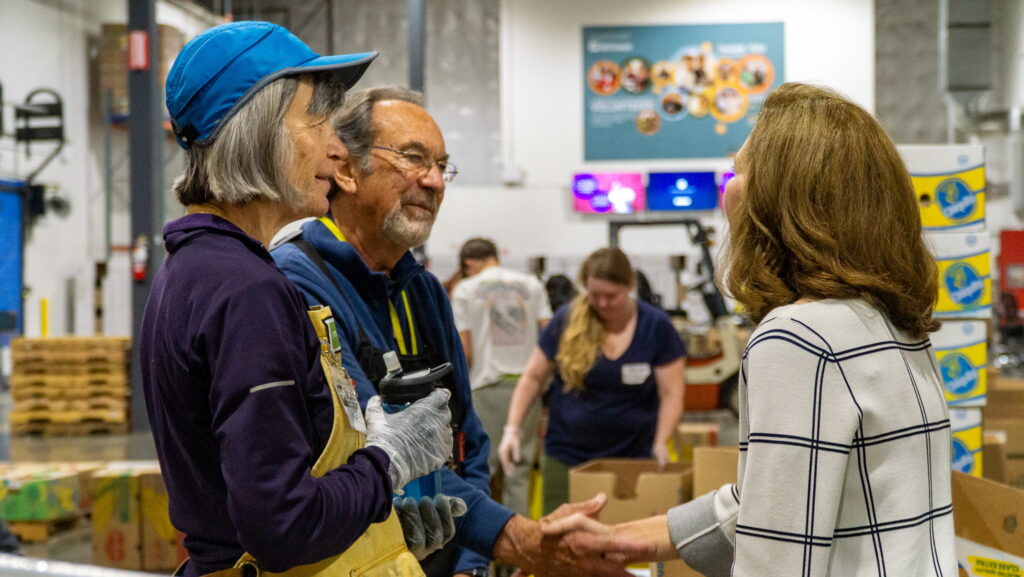
But the growing need for food he sees during his shifts has surprised him.
“It’s a little overwhelming,” says Frank.
Growing up hungry himself, the need strikes deeply. Frank organized his own fundraiser to raise money for Food Lifeline, and has already raised over $12,000 dollars.
For anyone thinking about volunteering, Frank advises, “Risk it, Risk it! Volunteering is a gift that transforms the giver. You will discover, you get even more out of it than the people you’re serving. It’s a gift that transforms the giver for sure.”
“And the other thing is, if you volunteer, you’re going to meet new people. There are so many people that are sort of isolated in life and this is a way to break out of that.”
Volunteering also provides an opportunity to be part of something bigger than ourselves.
“I have a very real experience of a connectedness to something bigger than myself. When people are involved here, even just driving here, you kind of interact with traffic and then you interact with people and it’s soul nurturing. It nurtures the soul. It feeds our soul.”