Volunteer Spotlight: Baskar Kesavulu
Building a Chain of Generosity
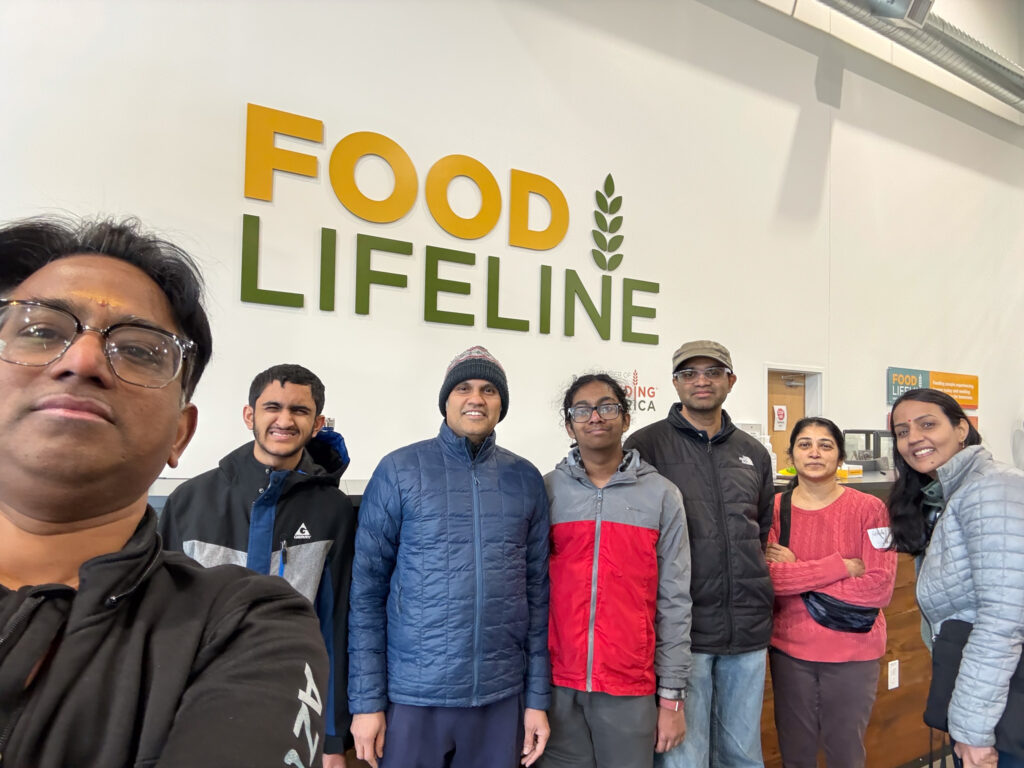
Photo: Baskar with his sons at a Food Lifeline volunteer session last year.
For more than a decade, Baskar Kesavulu has turned service into a way of life, bringing together families, kids, coworkers, and community groups to support Food Lifeline. With many years of community service alongside his IT career, Baskar has made volunteering a cornerstone of both his professional and personal life. Since first stepping into the warehouse in 2010, Baskar has expanded his impact by serving as a Microsoft ambassador, inspiring colleagues to get involved. In 2012, he began leading a youth group from the Sri Sathya Sai Seattle Eastside Center in volunteering one Saturday each month, helping them experience firsthand the importance of compassion and giving back. Baskar believes generosity is contagious, and that as we engage in service we inspire others to do the same and build a web of community care.
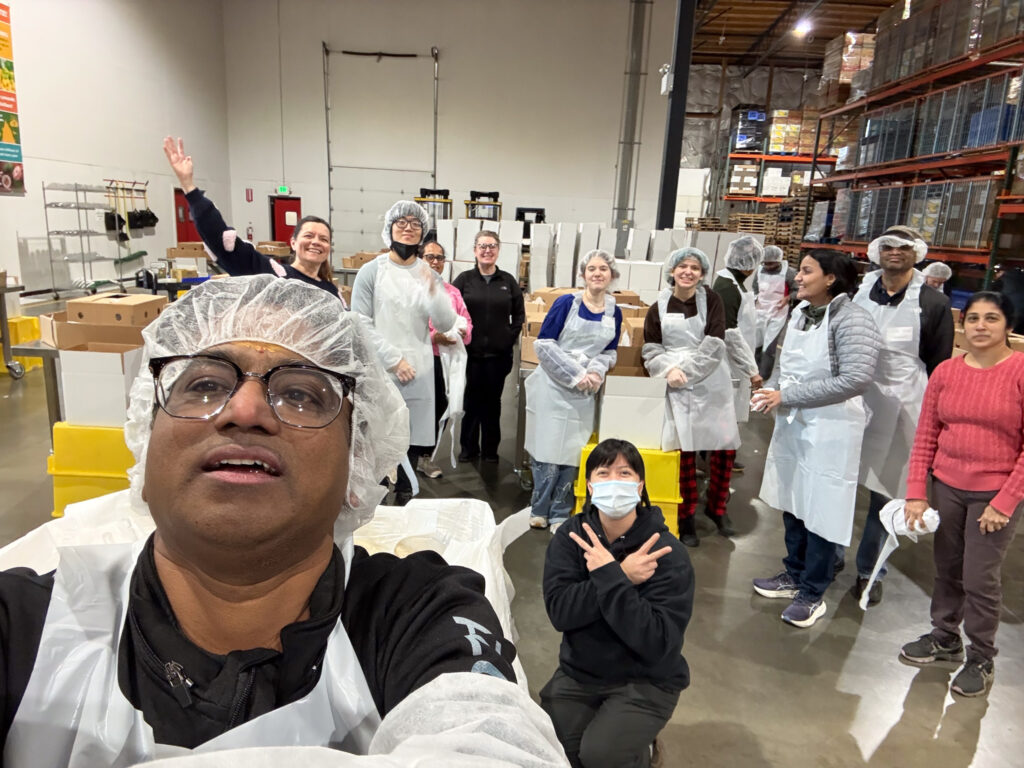
Every second Saturday, Baskar’s group leaves for the Warehouse. When his oldest was younger he had a 7 seater car and would bring 9 kids. He would tell them that the car would be leaving promptly at 8:00. The car rides always included lively debates about movies or shows and the group would take a poll of where to get a post-volunteer treat, often Krispy Kreme or Starbucks.
But the experience doesn’t end there. Back at the Sai Center, the children reflect on their experience, sharing stories of what they accomplished and how they contributed. As the kids share, other kids get excited to volunteer and the group grows. What started in 2012 with 12 people has grown to 68 volunteers, and is till growing.
“I try to teach them we need to give back to the community, and how to put their heart and soul into it.”
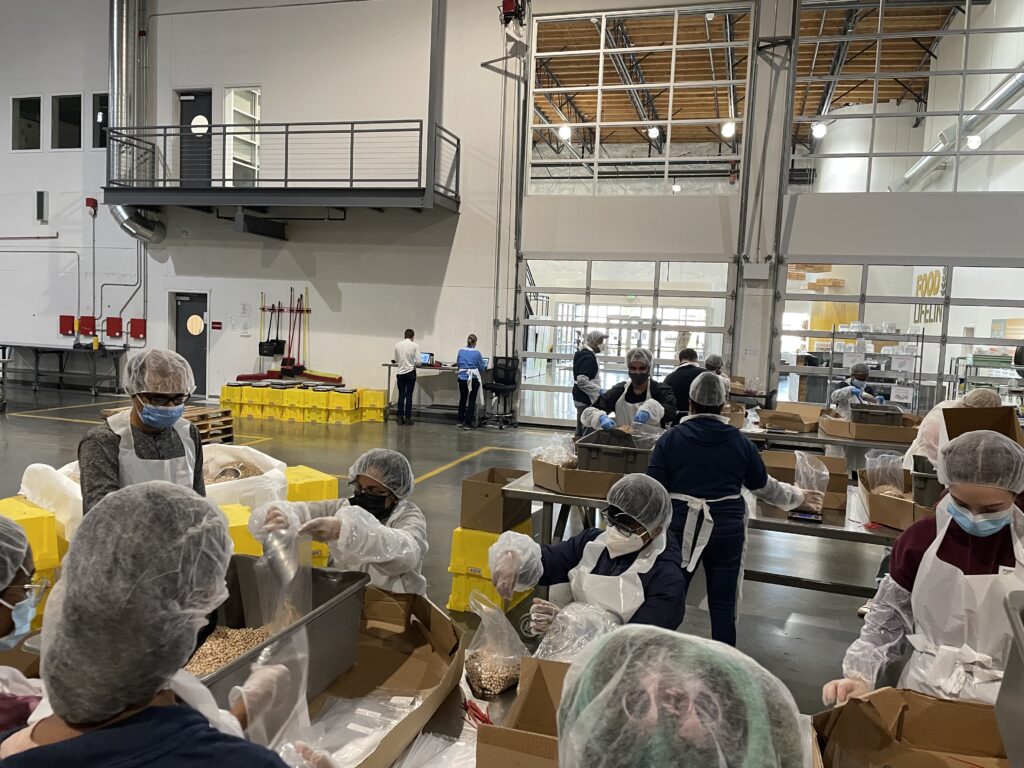
Baskar’s approach to service is hands-on and joyful. At Food Lifeline, the kids will look for unusually shaped potatoes, or will carefully fill bags of rice to try to make the scale hit exactly two pounds. These activities keep the kids engaged, making volunteering something they look forward to.
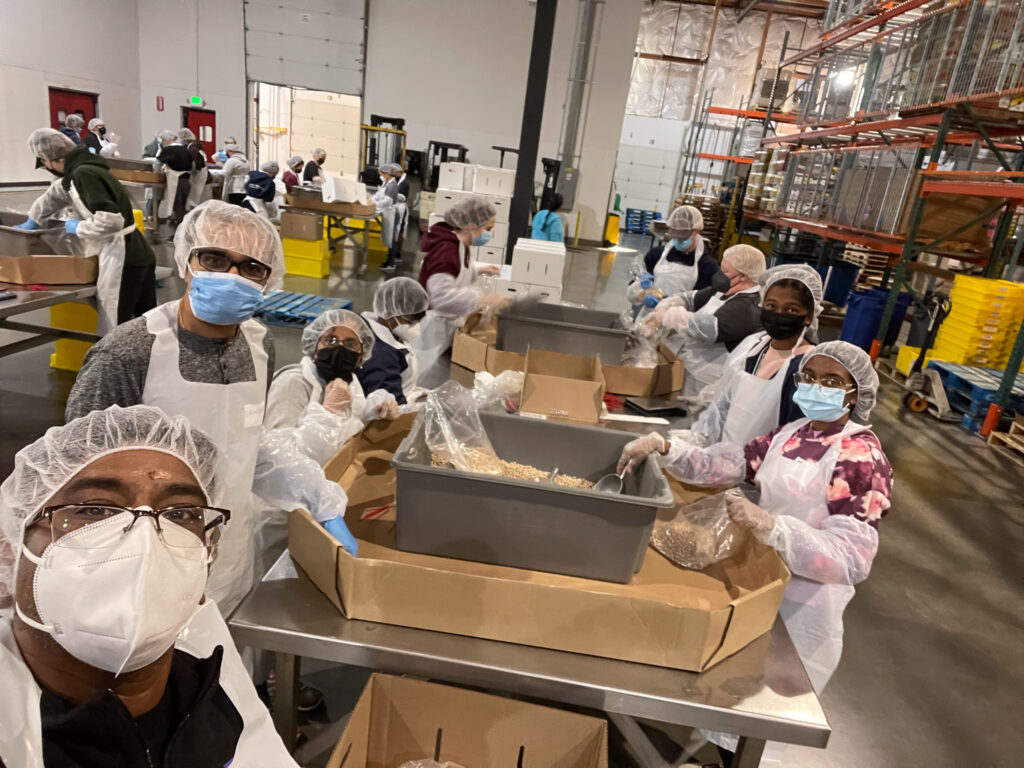
Beyond Food Lifeline, the group helps the kids experience a wide range of service opportunities. They might assemble hygiene kits for people experiencing homelessness, visit senior centers to sing for residents, or participate in major events like Stamp Out Hunger. Each experience gives kids a different perspective, and reinforces the idea that service has a big impact on our communities.
He also leads by example, involving his own family in service from an early age. His oldest son began volunteering at age six and is now in college, while his youngest is excited to join every opportunity.
“I’m helping the kids, and my friends’ kids to learn something special about life.”
Baskar believes volunteering and service creates a chain of love and generosity. He gives the example of Stamp Out Hunger: Some people gather the food and put it by their mailbox; the Mail Carriers pick up the food and bring it to the postal station; Baskar’s group moves the food from the postal trucks to the Food Lifeline Trucks; Food Lifeline workers transport the food back to the warehouse; and volunteers in the warehouse will sort the food for distribution to food banks. Everyone along the chain is committed to their work and it all goes towards helping others. Sometimes he asks the kids to draw a picture of this.
“I see that the love from that one home started from one box. It is not just our hard work. There is somebody’s love and intention going through you that you are carrying.”
This concept helps young volunteers see that they are part of a “chain of love and generosity,” where every effort matters and connects people across communities.
Baskar’s dedication stretches back decades. Since 1998, he has supported the YWCA, first delivering food and now serving meals. Through his role at Microsoft, he encourages colleagues to volunteer and fundraise for Food Lifeline, extending his impact into the workplace.
His personal goal is to contribute at least 120 volunteer hours each year, but more importantly, to inspire others to do the same.
“Volunteering itself is rewarding.”
At the heart of Baskar’s work is a belief in the transformative power of service. He wants young people to carry these experiences with them into adulthood—not just as memories, but as tools for resilience and purpose.
He reminds them that if they ever feel discouraged, helping others can be a path forward and a way to reconnect with meaning and community.
“If you give a give hand to service, heart to love, mind to God, that life would be blissful.”
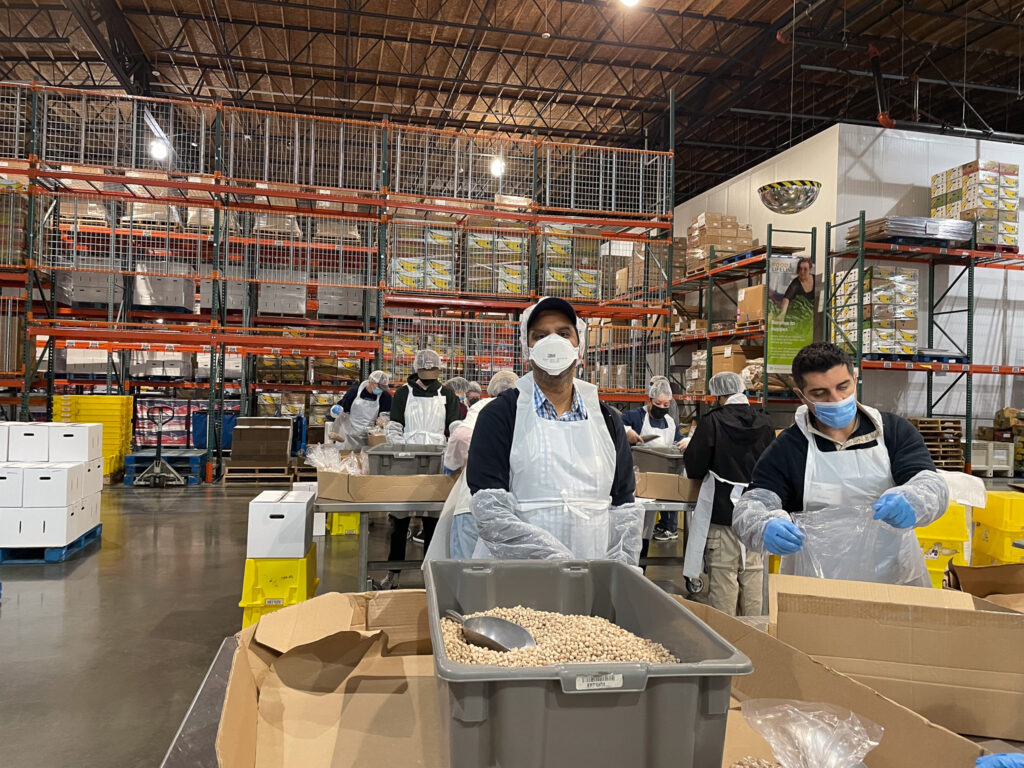
Baskar also emphasizes empathy and understanding, encouraging his kids to learn what people truly need rather than making assumptions. He models how to connect with others respectfully and recognizes that roles can shift, and that anyone can be a giver or a receiver at different points in life.
“So giving is contagious,” says Baskar. “It doesn’t stop with one or two people.”
Baskar sees service as providing endless possibilities to make the world better. He continues to grow a web of community care, showing that acts of kindness spark a chain reaction.