


Volunteer Spotlight: Abby Wang
Abby Wang’s path with Food Lifeline began in the Summer Teen Leadership Program, where she learned about food equity, developed leadership skills, and gained a deeper understanding of the logistics involved in getting food to communities. This summer, she returned to help run the volunteer-led Shop the Dock program, which provides surplus food to community partners while reducing waste. The experience has brought her full circle, allowing her to move from learning about hunger and food distribution to taking an active role in the day-to-day work of supporting local food banks. She loves forming connections with other staff and volunteers and being able to see the impact of their collective work across the entire community.
Abby first discovered Food Lifeline when she volunteered with her high school as part of orientation. During her junior year, she saw that Food Lifeline was starting a Summer Teen Leadership Program and decided to join. The program offered students from local high schools a variety of educational workshops focused on Food Lifeline’s mission, along with opportunities to build leadership skills and participate in volunteer sessions.
Participating in workshops on logistics and food equity gave Abby a more comprehensive understanding of the work Food Lifeline does to support food security.
“That helped really put things into perspective for me about what Food Lifeline specifically does and the help that it gives to a lot of communities at once.”
She also enjoyed the opportunity to do office administrative work for the first time and help run a food stand at Bite of Seattle, with proceeds going to Food Lifeline.
The program also gave her an opportunity to make a difference in her community.
“A lot of the issues that you hear about and you kind of want to do something or contribute to it.”
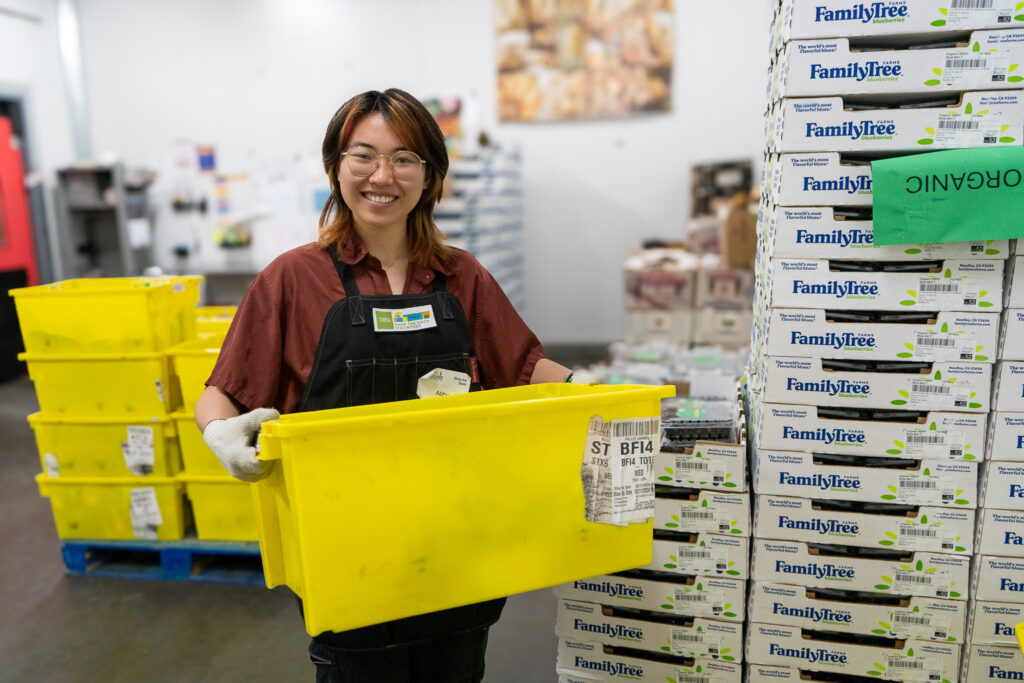
Now back home for the summer after her first year of college, Abby is running Shop the Dock as a volunteer. Shop the Dock is an innovative program Food Lifeline developed several years ago that allows agencies to come to the warehouse to pick up food that is nearing its expiration date or is not available in quantities large enough to be distributed through regular channels. The program helps agencies access extra food while reducing waste.
Working in Shop the Dock is a natural continuation of her work in the summer teen program. Her interest in volunteering over the summer was also motivated by her experience participating in congressional debate in high school, where she researched federal and state bills that funded nutrition assistance and anti-poverty measures.
“Over the course of preparing for those bills and studying, you really get to learn a lot about the systemic inequities that exist and the lack of access to food.”
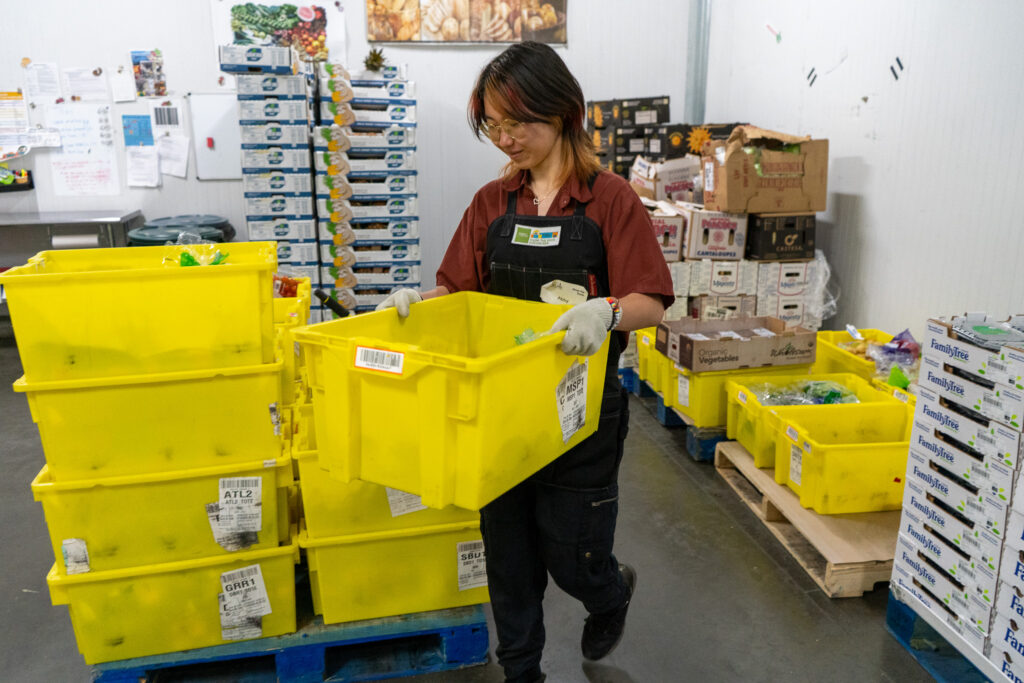
In Shop the Dock, Abby works with other volunteers to sort bread, move pallets of food from the storage area, and help agencies find specific types of food they are looking for.
Abby enjoys the physical work of Shop the Dock, which she says can sometimes take on a meditative quality. She likes staying busy while knowing that she is helping people.
But her favorite part of the work is forming connections with the food bank volunteers who come in to pick up food. She likes that her role allows her to be community-facing. Many food bank partners tell her about the communities they serve and the kinds of food their communities like to eat.
“It’s really nice getting to know people, and I think it adds a lot of community to the process of distributing food and helping with food and equity, for sure. It’s so important in this work.”
Overall, she says the work is “kind of a nice mix of interaction and getting in the flow.”
“It’s fun being able to volunteer somewhere where I can see where my efforts are going and where I can get to know people a little bit better.”
She says the summer program helped prepare her for working in Shop the Dock.
“I think definitely helped a lot with at least getting you to start thinking about managing things and the logistics of working with food lifeline in general and distributing food to so many places and then keeping in mind cultural relevance, and just generally the staples that people always try to get.”
She says she understood the issue of hunger, but the program made her more aware of the day-to-day logistics and real challenges behind food distribution. Through hands-on volunteering and workshops, she was able to see how organizations and communities work together to increase access to food.
“Being able to get that sense of community and more of a perspective on a day to day level on the ground level, handing out food and making sure that organizations can get what they need is definitely different than debating about it or just considering the issue.”
“I think that it’s important for people to understand how systemic the issue of hunger is and how tied it is to issues of systemic poverty as well and food and security in general…It’s not right to turn people away or to minimize the amount of help you’re giving just because some people might abuse it.”
Doing the hands on work keeps her energized and hopeful for the future of the movement.
“Coming in makes me hopeful because I’m able to see the impact. And that makes me hopeful that more can be done in the future and that as long as we can keep working towards something, that eventually people are going to start seeing the benefits of systemic change and that ultimately the real causes can be addressed.”