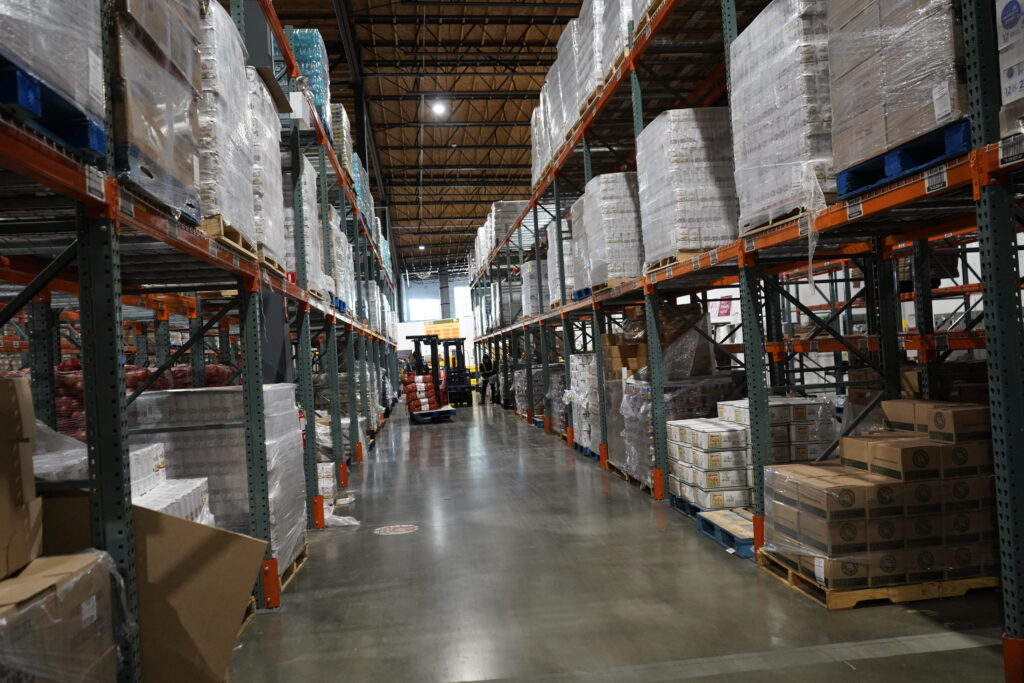
Perfect Pick: How Food Lifeline’s Picking Team Delivers with Near-Perfect Accuracy
PHOTO: Picking Team, Back Row, l-r: Michael, Lacey, Shirwin, Ronel, James; Front Row, l-r: Javier, Stasi, Joey
Perfection is hard to attain, but our Picking Team has been operating at levels close to it this year. The tens of thousands of pounds of food we distribute every day to food banks across our region depend on this team’s quick and precise work “picking” and packing orders onto pallets for our network partners across Western Washington. Their care and hard work are crucial in ensuring food banks receive the foods their communities need, right when they need them.
Picking requires the team to pack huge volumes of product with great speed and accuracy. The industry standard for accuracy is around 89–90%. Food Lifeline’s team averages close to 95% accuracy and, so far in 2026, has neared 100% in all zones at least 10 times.
Considering the volume and variety of product they are packing, this is no easy feat. As they strategically move a forklift through dry goods, the cooler, and the freezer, they must locate each item on the order sheet, make sure it is the correct product and pallet number, and confirm there is enough product to fulfill the order. At each “line” on the order, everything has to be perfect. And team members do this hundreds of times a day, touching thousands of cases of food with every order.
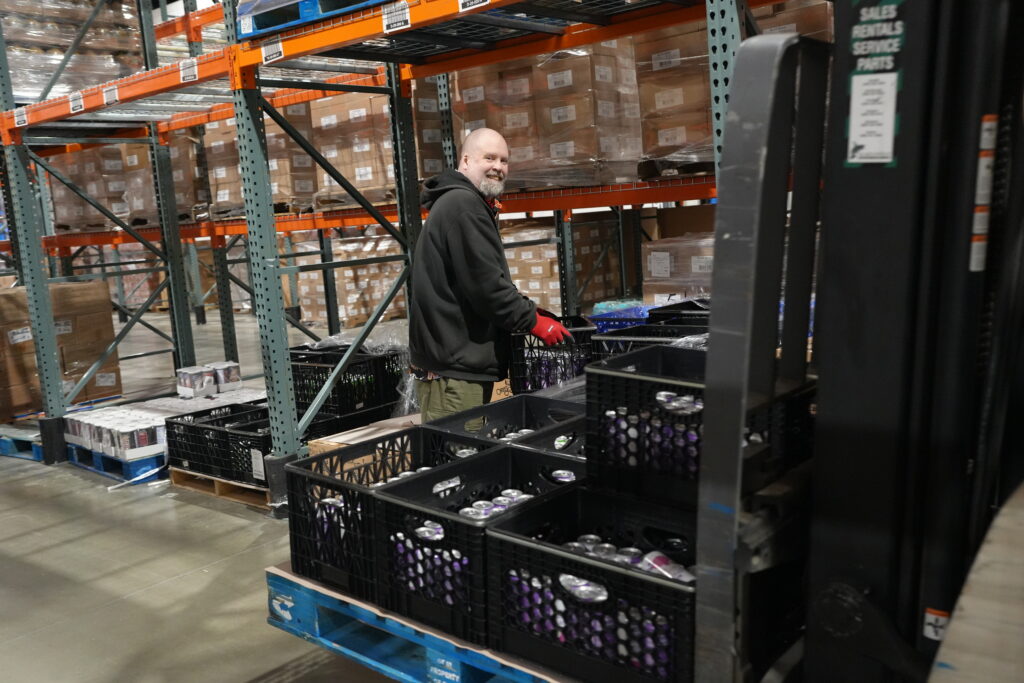
“Each time you stop is a potential opportunity for something to be a little bit off,” said Michael Johns, the Picking Shift Lead.
Michael and the team attribute their success in part to several new strategies they have implemented to improve accuracy and efficiency.
- Full pallet suggestions – The team picks from a full pallet, rather than several partial pallets, reducing the potential for miscounts and increasing efficiency.
- Pick by weight – Like products are stored near each other, making pallet building more efficient and helping team members stay focused because they are not getting as tired.
- Quality control – Every order is checked by another teammate.
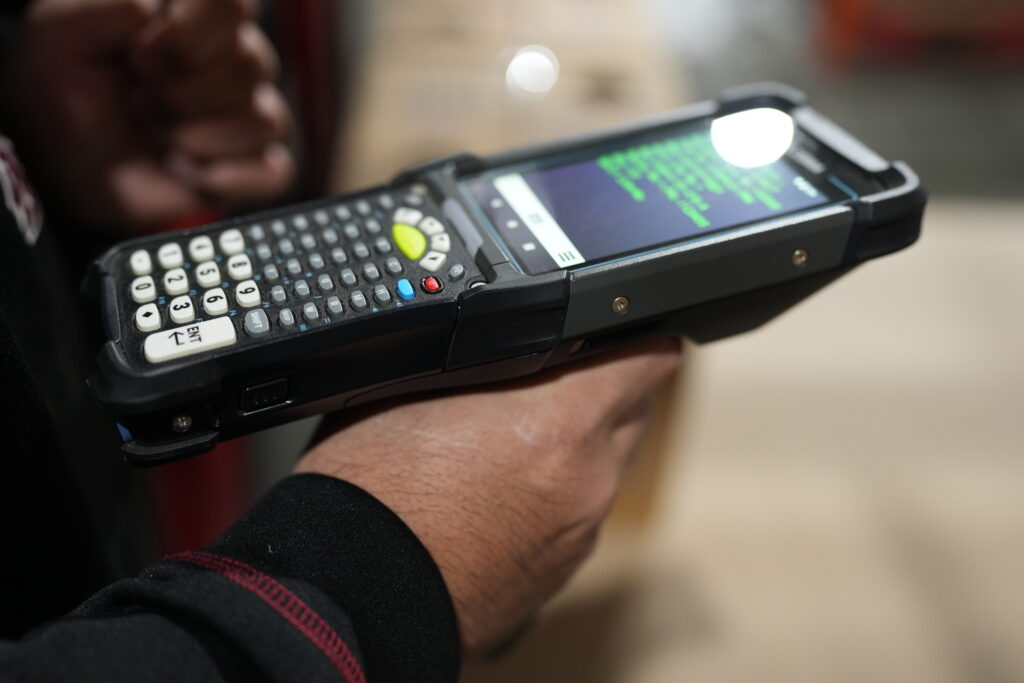
- Picking by scan guns – Implementing scan guns increased accuracy by 1–2%.
- Running Jet Reports – These reports show what is supposed to be on each pallet. If there is a discrepancy, the team can recount or determine whether or not a product was distributed properly.
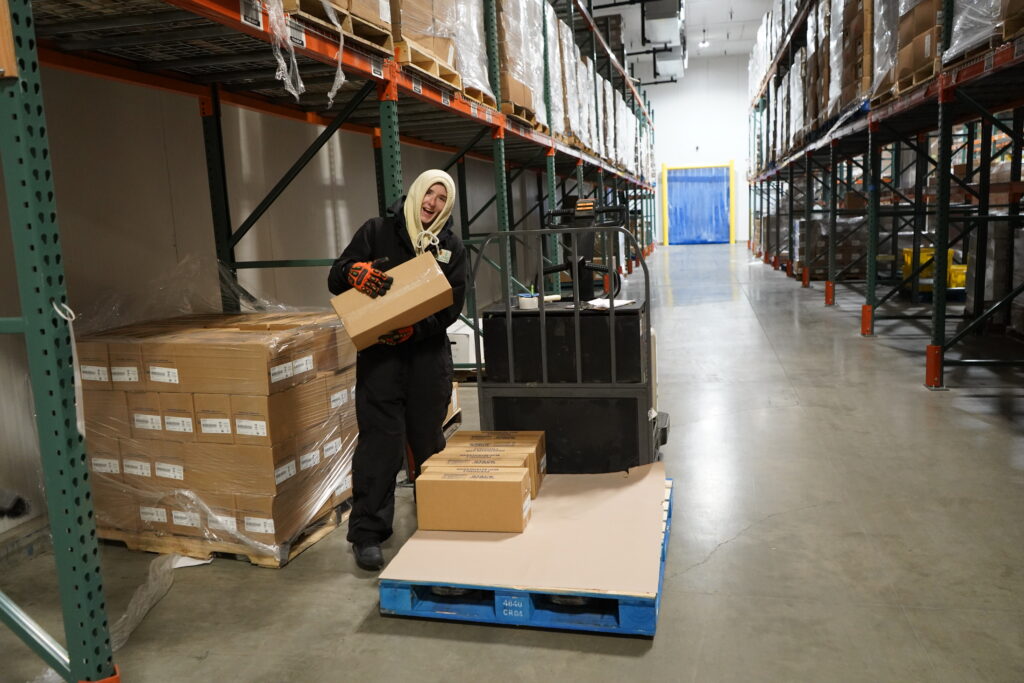
Warehouse Associate Lacey Soar said several factors are working together.
“It’s a little bit of competitiveness, a little bit of the new systems we’re putting in place, and the pressure to make sure it’s all right. We’re always aiming for 100%.”
– Lacey Soar
Warehouse Associate Rabbit Vasa emphasized the importance of thorough Quality Control (QC), which involves another teammate checking not just quantities, but the proper product as well. “It comes down to QC the right away. That’s the only way for me to get it right. Even though you look at oh, oh, say, five or ten milks. is that the right milk they’ looking for? If you want a perfect score, you have to QC the right way.”
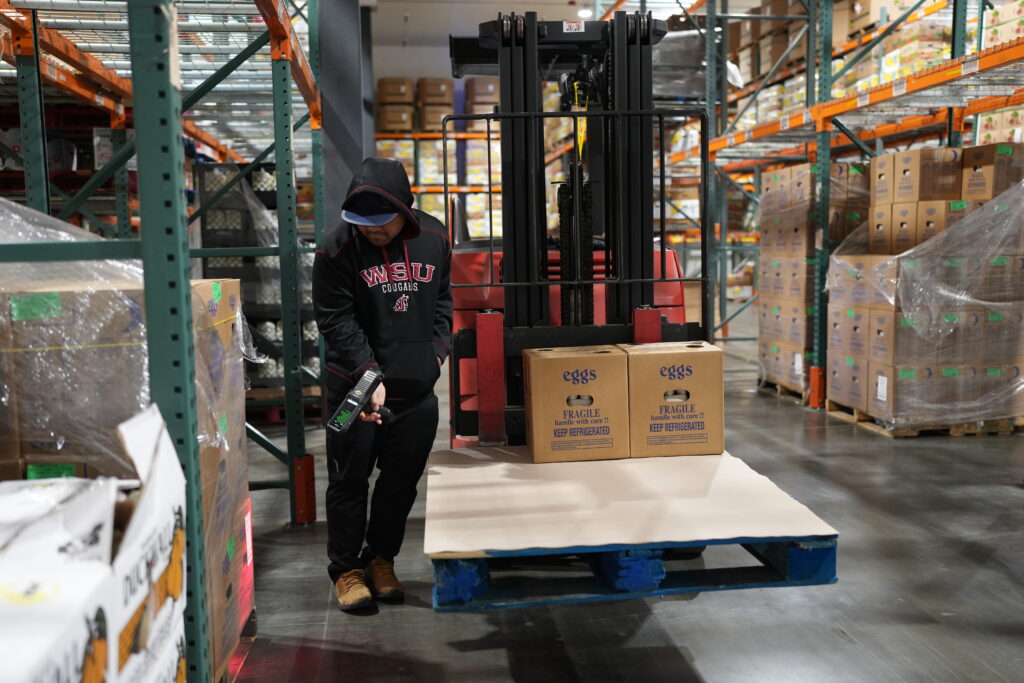
For all of the tools implemented, teamwork has proved to be the most crucial element. The accuracy of their work depends on the accuracy of the entire Operations Team, from receiving to inventory. The number of cases on a pallet can be slightly miscounted in receiving, cycle counts, or the picking process.
“So it’s called pick accuracy, but it’s actually the whole team. When it’s 100%, it’s because the entire team made it 100%.”
– Michael Johns
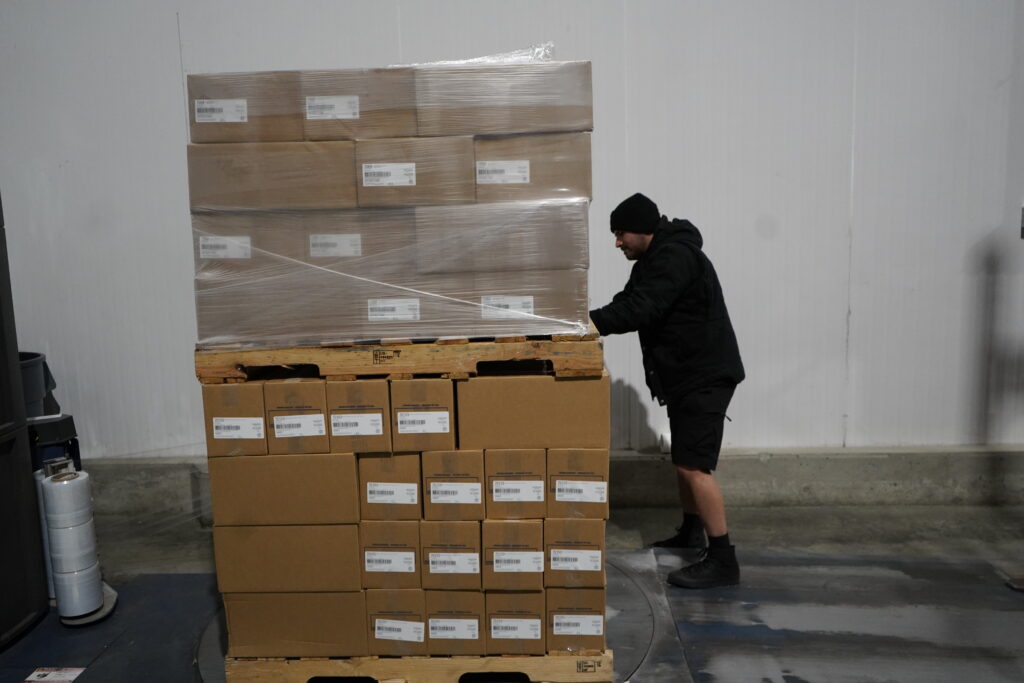
Michael says that when there is a stack of orders and a team member has the choice between an easy or difficult one to fulfill, each person will almost always pick the hardest one, leaving the easier orders for their teammates.
“They’re making sure their teammates are not being held with a higher expectation.”
The team’s ability to support one another is one of their biggest strengths. Coming together before they even begin work to get off to a good start has been key.
“Lots of conversations,” said Warehouse Associate Stephen Stasi, when asked what’s helped them to hit near-perfect scores. “Interaction with the crew when they first get here in the morning. Sitting down with them in the morning and just talking about what we’d like to see happen and how we’re going to make it happen.”
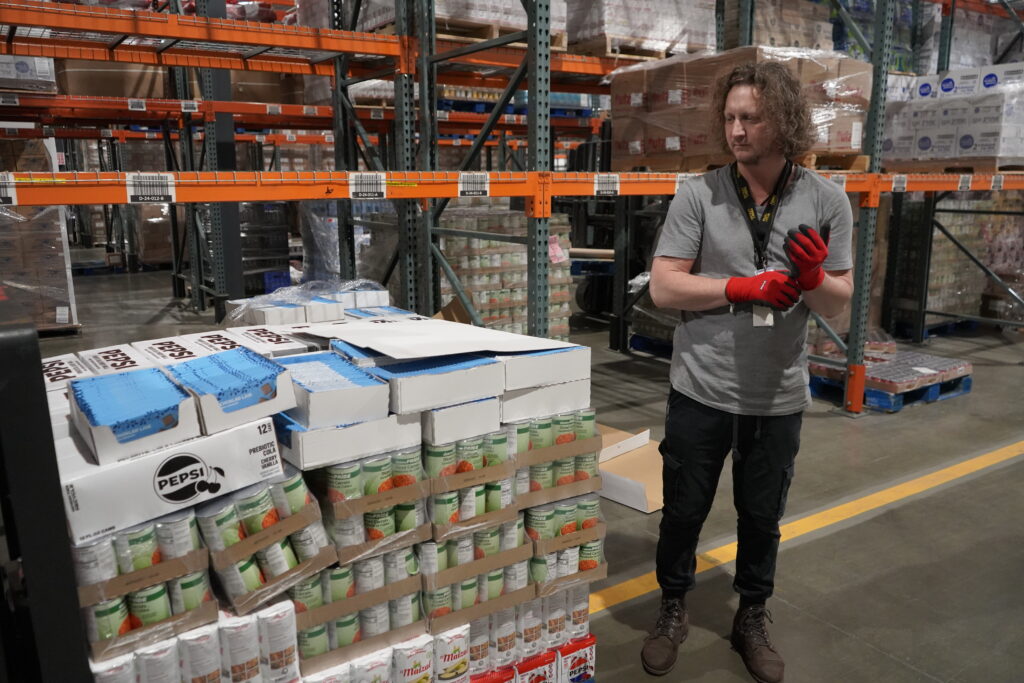
As the team implements new approaches, they continue to look for ways to make processes more efficient and accurate.
“It’s evolution,” said Michael. “We’re going to continue to evolve as we find out new information.”
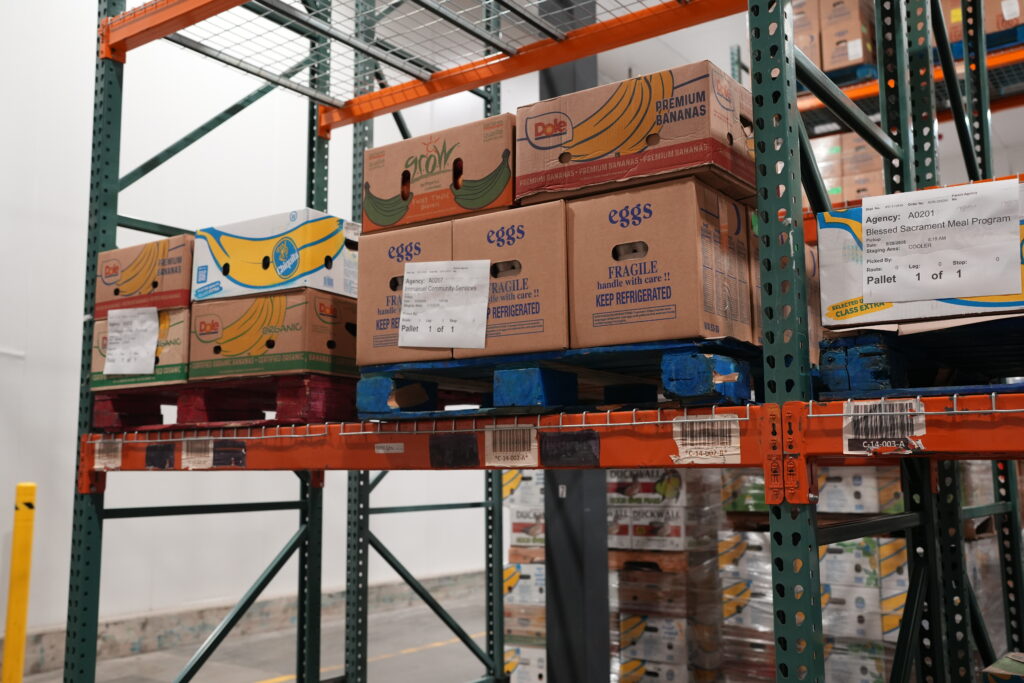
That means our partner food banks and meal programs are able to get the types of food they need in the exact quantities and timeframe they need it.
“An organization that needs the food is getting what they ask for, because they know better what they need than we do,” said Michael. “There’s a lot of pride, and then making sure that people get what they what they tell us they need… We want to make sure people get the culturally appropriate food and the correct amount that they need.”
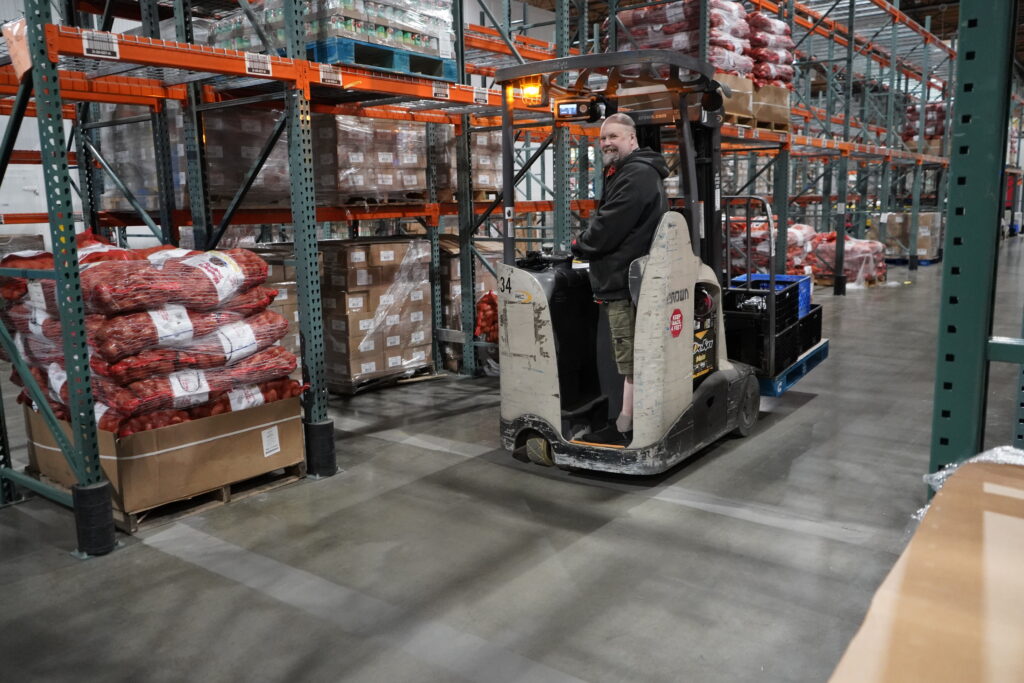
This in turn allows us to better meet our goals of equitable distribution by helping us understand, in real time, exactly how much food we have available to distribute.
“Keeping accurate inventory allows us to distribute the most equitably, because when agencies get exactly what they’ve ordered and we have exactly how much left over as we should. Then the next agency gets exactly what they ordered and so on and so forth. It really is a cascading event,” said Annie Davis, Inventory Control Manager at Food Lifeline.
Every accurate order represents trust kept with partner agencies and communities across the region. Through their precision, teamwork, and constant focus on improvement, the Picking Team helps ensure food is distributed more equitably and effectively, and partners can count on receiving what their communities need.