Nourishing Our Seniors
Melody Leo chats up her neighbors over a plate of roasted turkey and mashed potatoes, discussing everything from politics to popular music. She comes here twice a week for a warm meal and good conversation. But it’s not easy. Each week, it takes her three hours and two buses to get to St. Luke’s Episcopal Church in Ballard, but she rarely misses the meals provided here by Edible Hope.

“I don’t know what I would do without these meals. I can’t cook for myself, so I get pre-prepared meals at the food bank and eat here. It truly helps.”
According to Feeding America, Melody is just one of 7 million seniors who experience food insecurity every year. With ever-rising grocery prices, difficulty with access, and stagnant social security benefits, more seniors visit food banks and meal programs.
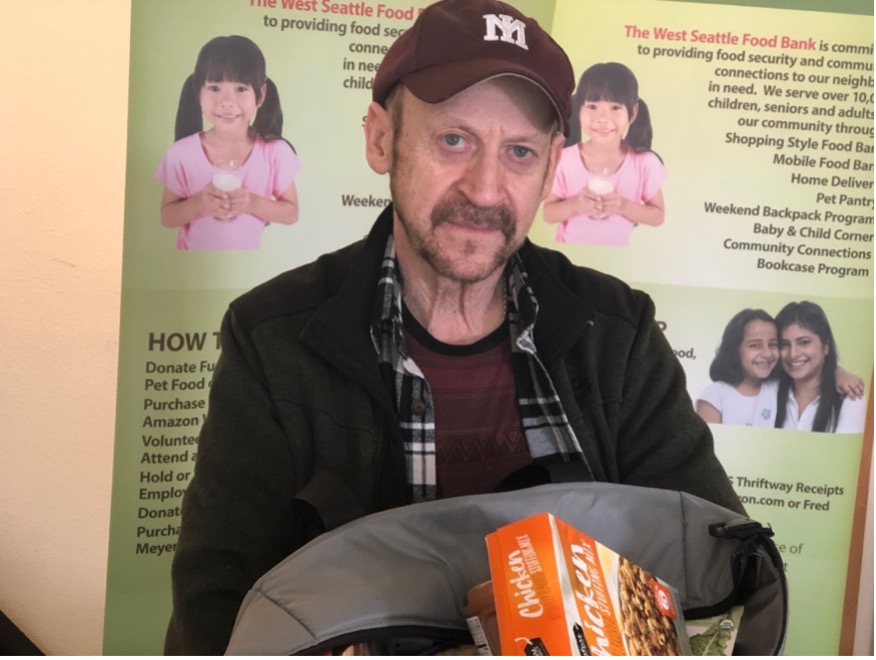
70-year-old Eric visits the West Seattle Food Bank regularly. Today, he takes home fresh vegetables, a loaf of bread, and a gallon of milk. Food that will help keep him nourished in the coming days.
“I get the food I need to not only prepare meals, but to feel good. It’s a real piece of mind not worrying about having enough food. That’s stressful. Having food relieves me of that stress.”
According to the National Council on Aging, more than half of the seniors in this country who are qualified for SNAP benefits don’t participate. The Council cites difficulties with mobility, technology, and the stigma of assistance as the chief barriers.
Food Lifeline works daily to help its 300 partner food banks and meal programs provide the support they need to serve nutritious food to seniors.
“Food Lifeline allows us to have a constant and consistent flow of food to make our daily meals,” says Edible Hope’s Sarah Bates. “Whether potatoes and rice, dairy, or fresh fruit, Food Lifeline keeps us stocked.”
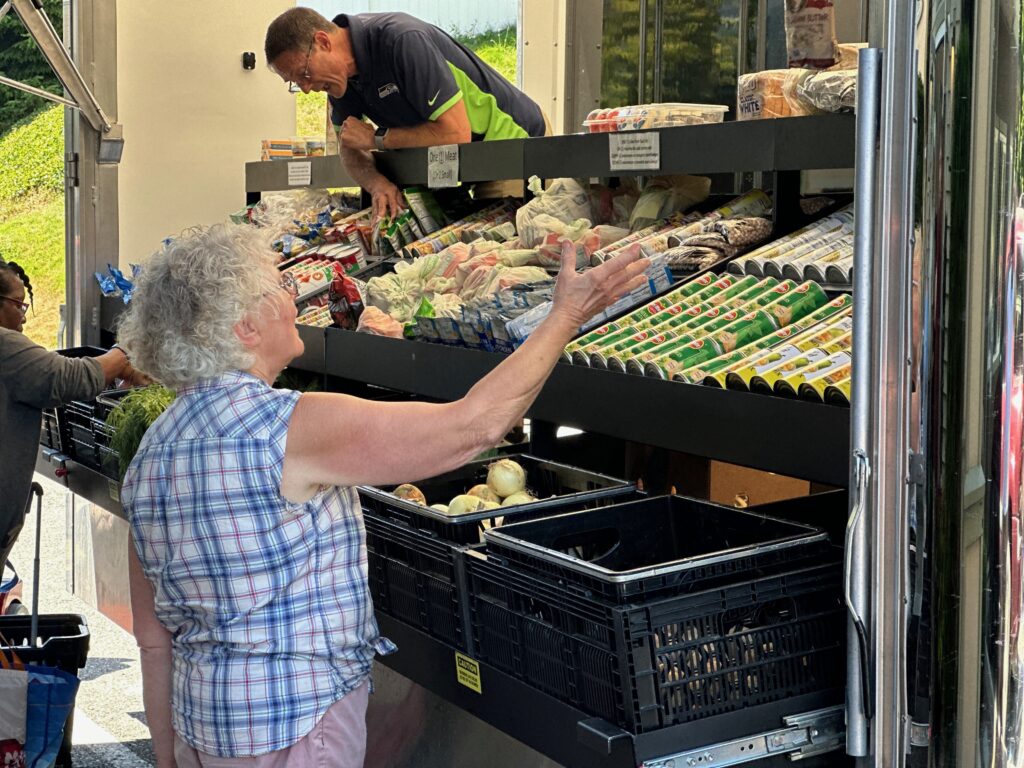
The best hunger solutions often come from local communities and organizations, and Food Lifeline focuses on supporting and helping to grow these home-grown solutions.
“I love that Food Lifeline has such a big network,” says Bates. “They help us get food from grocery stores, their warehouse, and local farmers delivering fresh produce. Amazingly, they invite local farmers to help feed people.”
Cambia Health Foundation is donating $15,000 to Food Lifeline to address the needs of senior citizens.
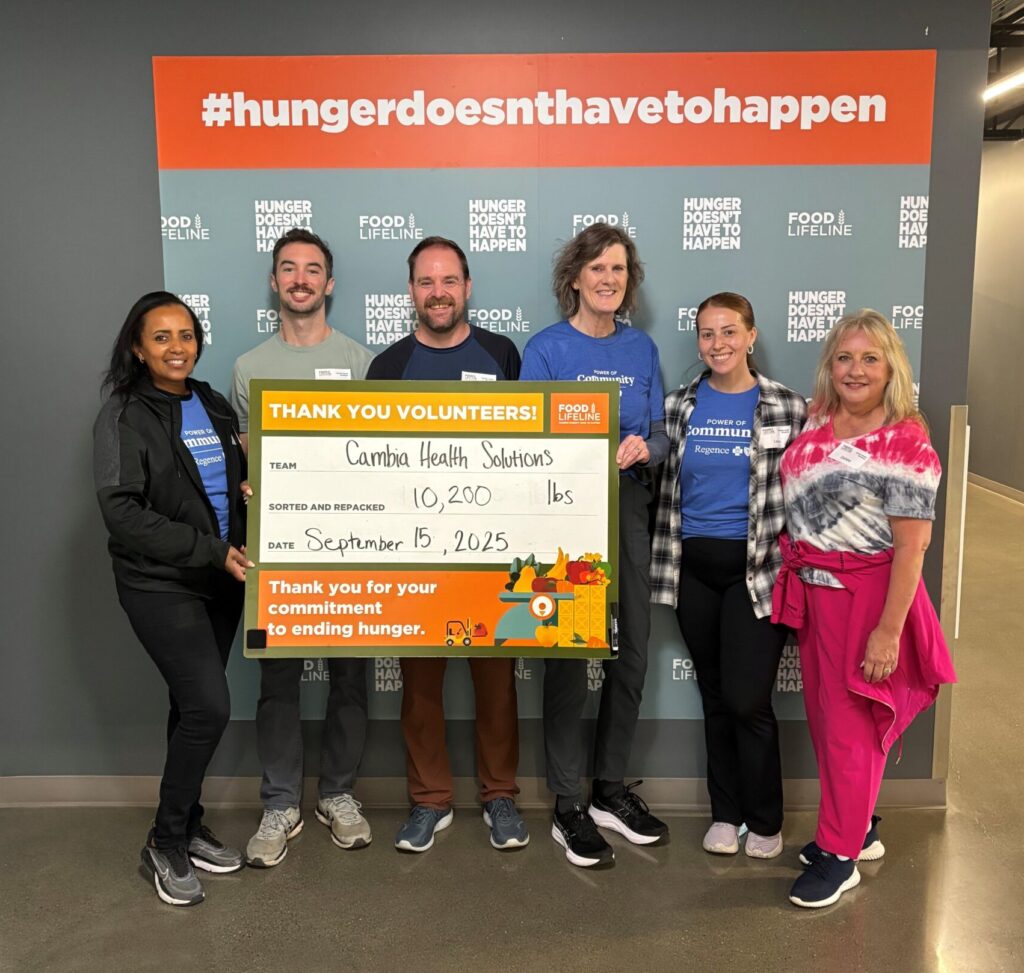
“Access to healthy and affordable food is a key factor in advancing whole-person health and reducing disparities,” said Peggy Maguire, president of Cambia Health Foundation. “We believe in a future where everyone has an equal opportunity to live their healthiest life possible, and food security significantly influences overall health. We’re honored to support Food Lifeline, which is dedicated to ending hunger within our communities.”
Please join Food Lifeline and Cambia Health Foundation and donate today to help serve our senior citizens.