From Truck to Table: How a Donation Becomes a Meal
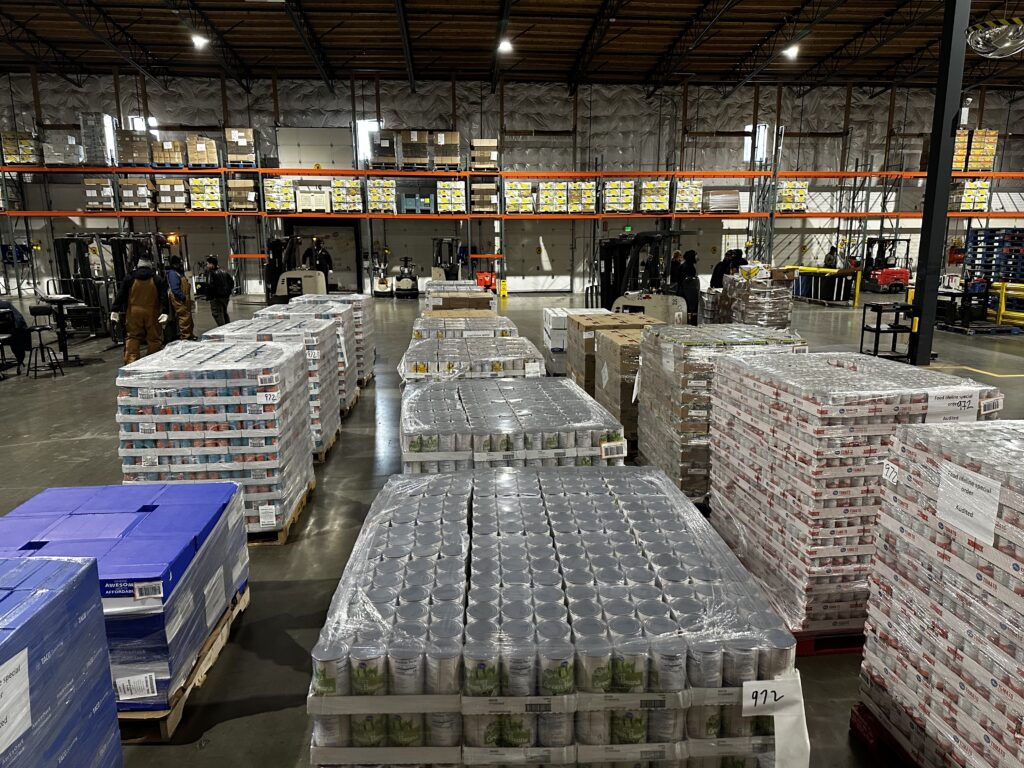
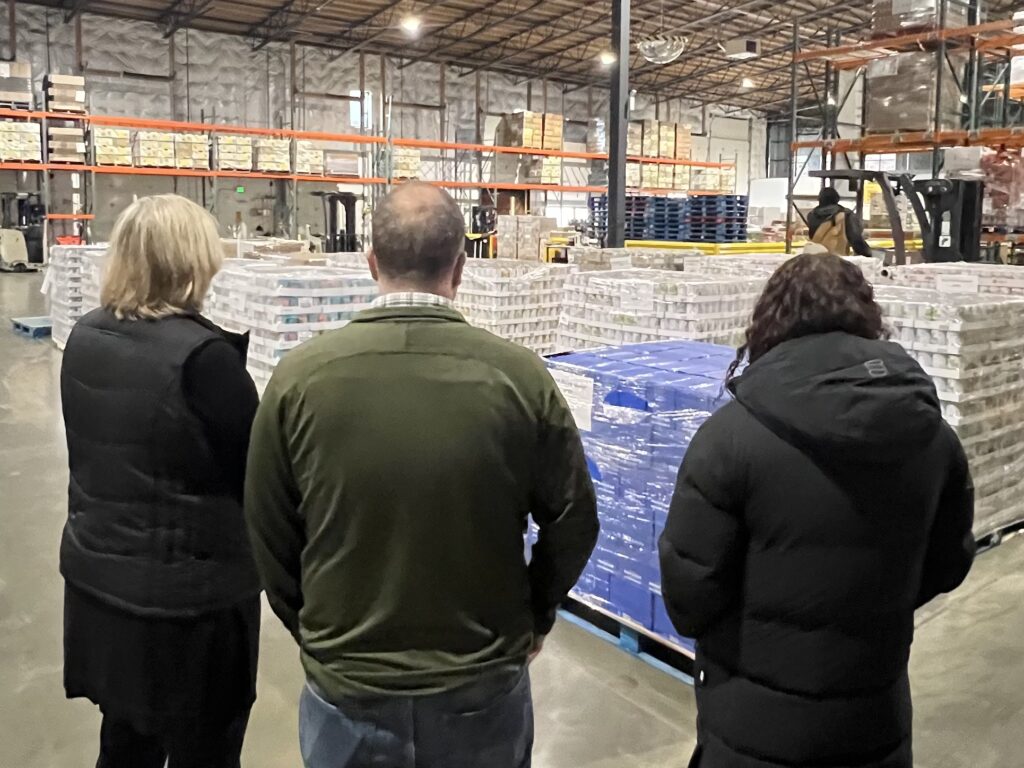
Yesterday was a big day at Food Lifeline. QFC and Fred Meyer came through with an incredible donation: over $250,000 worth of food. That’s three full semi-truck-loads, 108,582 pounds, and 6,866 cases of food. But here’s the real question: what happens after all that food rolls in? How does it go from the back of a truck to the shelves of local food banks for immediate access?
We’ve captured this incredible process in action in a video: check it out on our social media channels.
It all starts early, really early. 5:30 a.m., to be exact.
The warehouse hums to life. The lights flicker on, forklifts beep in reverse, and the air smells like coffee, concrete, and the kind of determination that only comes with knowing the work you’re doing matters. That’s when our warehouse receivers clock in, ready to unload those massive trucks.
The receivers, our early shift heroes, are the first on the scene, guiding trucks into the loading bays and rolling open those heavy metal doors. Then, it’s go time!
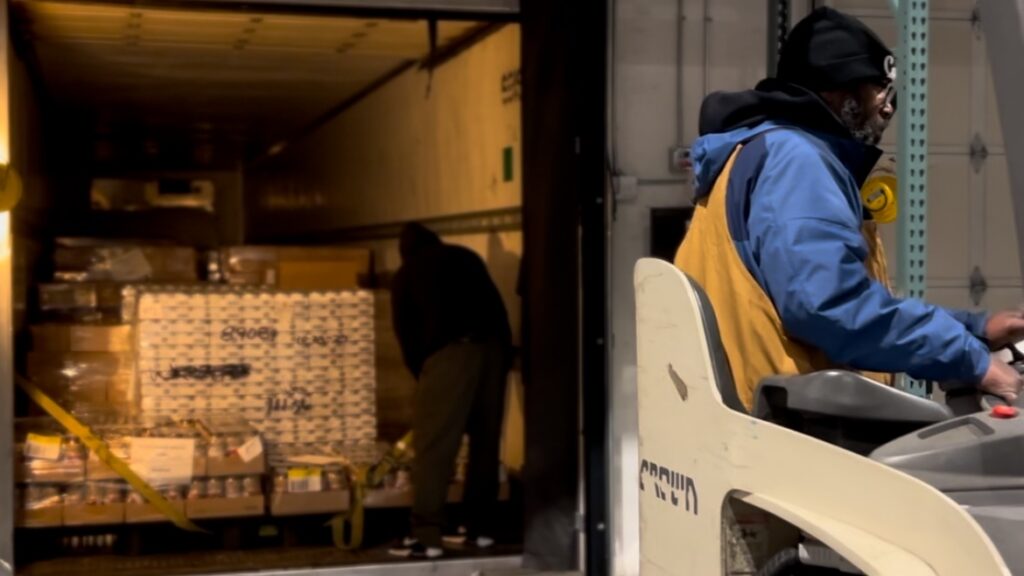
Pallet by pallet, case by case, they unload every single item, stacking and sorting it like a life-sized game of Tetris. Canned goods with canned goods. Cereal with cereal. Pasta with pasta. Expiration dates get checked. Case counts are logged. And every item gets entered into Ceres, the food bank software that tracks what we have, where it’s going, and how fast it needs to move.
Behind the scenes, our food resourcing team works tirelessly to secure donations like these, building relationships with retailers and manufacturers to bring in as much nutritious food as possible. Our food safety experts ensure that every product meet the highest standards, checking for quality and compliance at every step of the process.
By mid-morning, the inventory team steps in. They comb through the numbers and update our agency partners—food pantries, shelters, and meal programs—so they know what’s ready to order.
The numbers are staggering. Every month, on average 3.6 million pounds of food move in and out of the warehouse, enough to feed thousands of communities across Western Washington.
Then it’s over to the pick team, who load up massive pallets of food, filling agency partner orders with everything from fresh produce to pantry staples. Some agencies swing by to pick up their food directly. Others receive deliveries from our transportation team, who hit the road 5 days a week, covering Western Washington and making sure no community gets left behind.
And that’s exactly what this team does every single day. It’s a daily rhythm. It’s fast, physical, and fueled by a purpose.
At the heart of it all is a dedicated team with a shared mission. As Jim Procopio, our Director of Operations, puts it:
“Our mission is to feed those who are hungry today and to work to end hunger tomorrow. This warehouse team comes in every day to make sure that we can meet that first goal… they make sure that we are able to provide food today.”

Take Brian White, a warehouse veteran who’s been with Food Lifeline for over a decade.
“We have the best job in the world,” he says with a smile. “We make sure people have what they need.”

So the next time you see a food bank truck on the road, think of the people behind the scenes: the early morning receivers unloading trucks, the inventory team tracking every donation, the pick team carefully preparing orders, and the drivers delivering meals across the region.
They’re not just moving food; they’re moving hope.
We extend our heartfelt gratitude to QFC and Fred Meyer for their extraordinary generosity. Donations like this are what make it possible for us to continue working toward a future without hunger.
One truck. One pallet. One donation at a time. Please join us in the movement to end hunger.