Fresh Bucks for Fresh Produce Act Introduced at Food Lifeline, Builds on a Proven Seattle Program
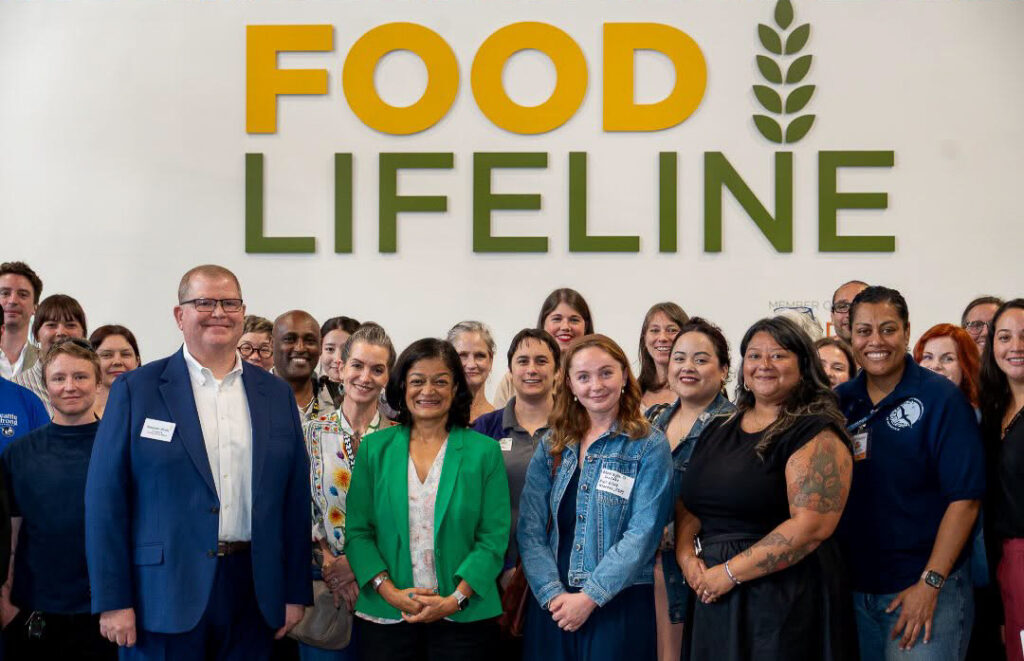
Our Hunger Solution Center buzzed with hunger advocates from across the region July 29 as Representative Pramila Jayapal introduced the Fresh Bucks for Fresh Produce Act – legislation that will expand access to healthy food for families across our nation.
Modeled on Seattle’s program, this new legislation would give families across the country making at or below 80% of their area’s median household income $60 a month for fresh fruits and vegetables.
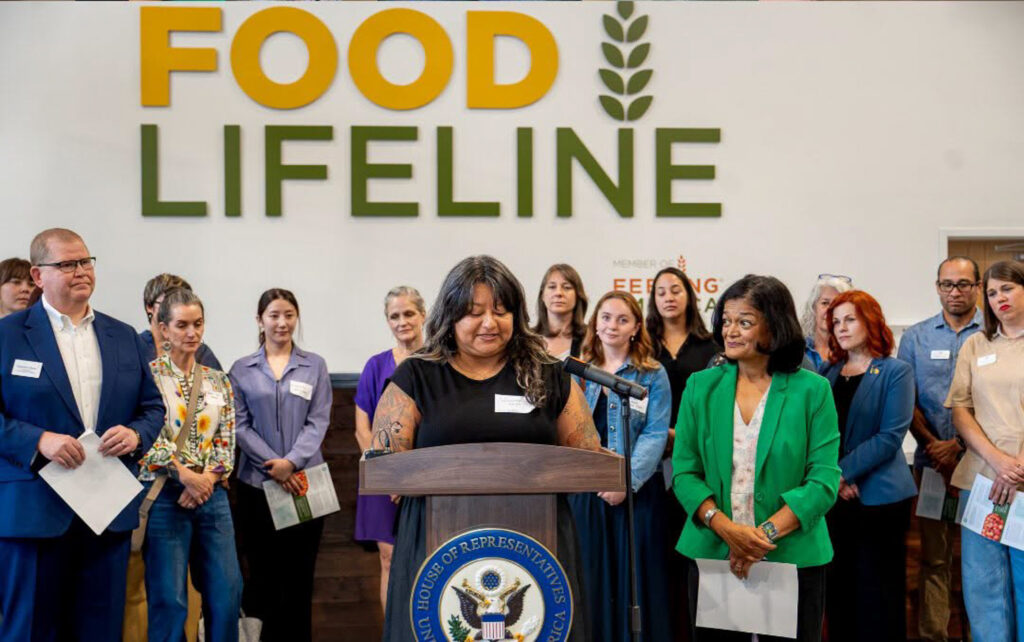
Representative Pramila Jayapal said, “This is legislation that would take Seattle’s very successful Fresh Bucks Program nationwide and would establish a pilot program with the USDA… In Seattle the Fresh Bucks Program has led to a remarkable 31% higher food security rate among participants and has had the added benefit of promoting healthy habits.”
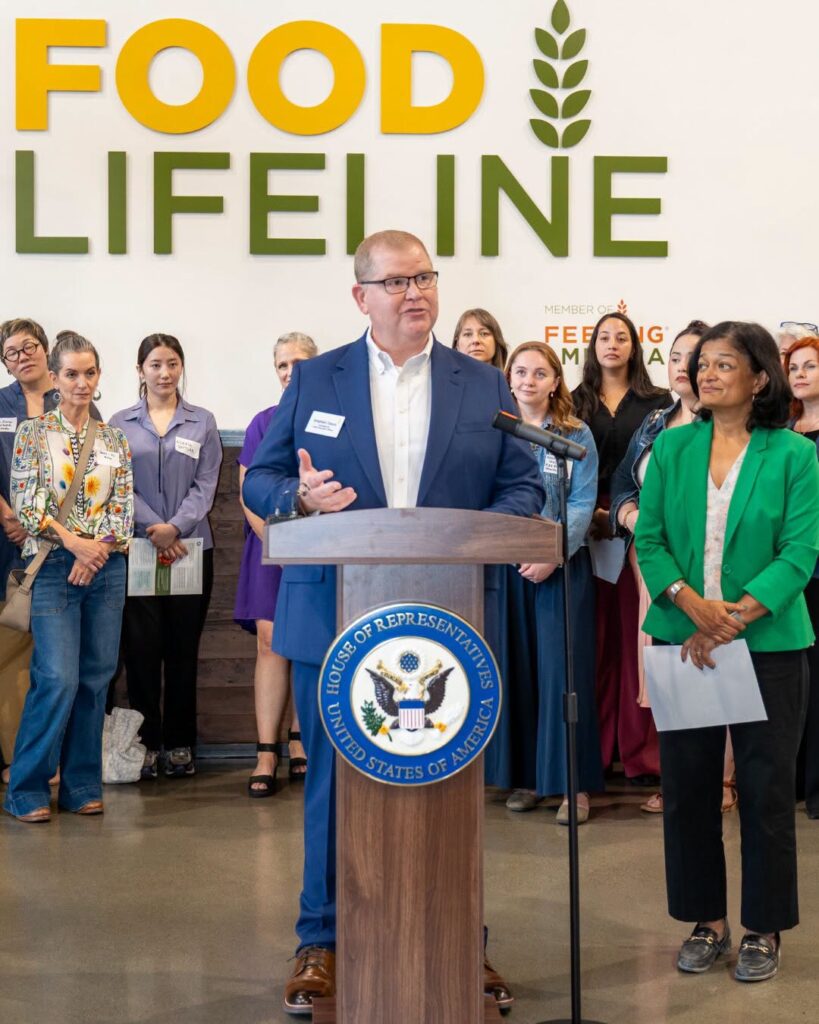
“We believe the Fresh Bucks for Fresh Produce Act represents the very best of effective food policy,” said Food Lifeline CEO Stephen Davis. “It gives people the dignity of choice. It uplifts culture, traditions, and personal preferences. It strengthens local farmers and neighborhood retailers. It helps families put healthy food on the table. And, it is a model that was proven right here in our Seattle community. We applaud Mayor Wilson and Seattle for continuing to invest in the Fresh Bucks program to support people facing hunger today in our community.”
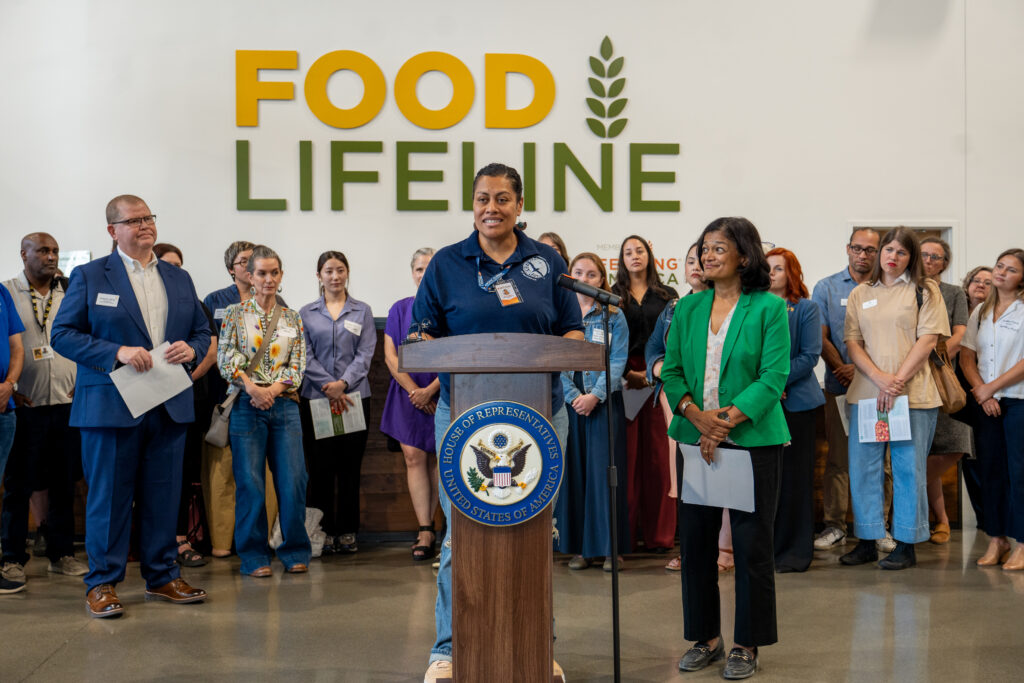
Lylianna Allele of the Seattle Office of Sustainability and Environment, Rosi Bolatagici, Pasifika Food Networks Manager at Pacific Islander Community Association (PICA), and a representative from United Way King County also spoke about the importance of the program for community food security.
Rosi of PICA emphasized how important increased access to fresh fruits and vegetables is in supporting cultural traditions.
“For native Hawaiian Pacific Islander families, it is especially meaningful as food is more than nutrition,” said Rosi. “It is our culture, our tradition, and it is a sense of belonging. Many NHPI families seek out fresh produce that reflects their cultural heritage and supports the meals that have been passed down through generations. Making these foods more affordable helps preserve the traditions while improving health and well-being.”
Each year, when we ask our over 300 food bank partners what their communities need most, access to more fresh produce is always at the top of the list. That need is mirrored nationally, and this pilot program will give families across the country greater access to fresh fruits and vegetables.
A 2025 University of Washington study, published Aug. 19 in JAMA Network Open, showed that Fresh Bucks households experienced a 31% higher rate of food security and consumed at least three daily servings of fruits and vegetables 37% more often than those assigned to a program waitlist. Authors of the study noted that the results showed a big impact in terms of how policy can support food security.
The bill is a reminder that our mission is only possible because of collective action. Lasting solutions to hunger don’t come from any one organization or individual – they can only happen when we all work together toward a common goal.