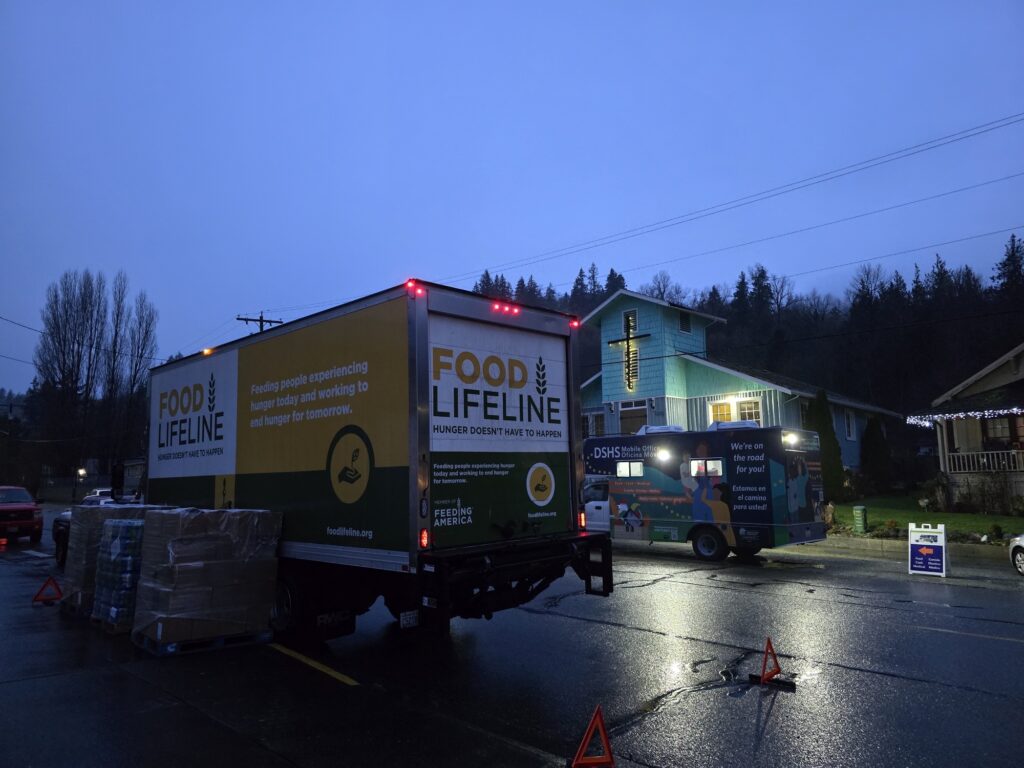
Food Lifeline Teams Quickly Mobilize to Deliver Care and Support During Floods
As historic flooding disrupted food systems across Western Washington in December, our teams quickly mobilized to source and distribute emergency food and supplies. Our Incident Command Structure team met daily over the winter break to plan the ongoing flood response, reaching out to network partners to hear about emerging needs, and meeting regularly with Western Washington emergency management agencies, including Washington Voluntary Organizations Active in Disaster (WAVOAD). The quick, collaborative response of all teams ensured partner food banks in the flood zone had supplies when they urgently needed them.
“Food Lifeline showed up with truckloads of food and water that we needed,” said Rebecca Skrinde, CEO of Helping Hands Food Bank, which was directly in the flood zone. “They were our first response. The participants in Marblemount, Washington, our most vulnerable population, were so thankful for the extra food, the type of food it was, and how quickly they received the help.”
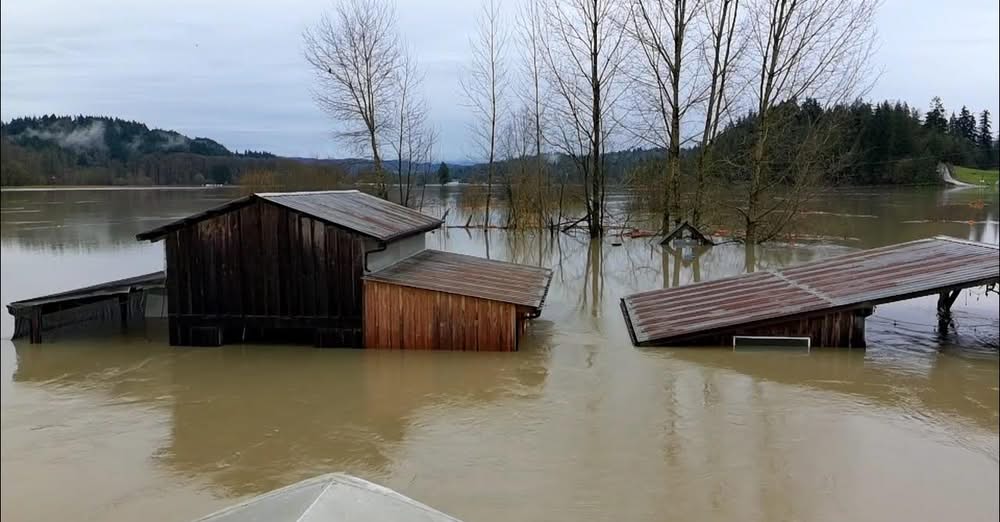
Five of Helping Hands’ six sites were in the flood zone, so their team had to temporarily close their food distribution program to help with evacuations and supporting first responders. They spent this time working with partners to get food, water, and cleaning supplies ready for when the waters receded.
“The agency relations team at Food Lifeline called Skagit Distribution center and said what do you need?” said Rebecca. “I appreciated the concern for Skagit that they showed. It felt like Food Lifeline wanted to get us what we needed not just what they already had on their shelves.”
Community Action of Skagit County, which distributes to about 20 food banks and pantries across the Skagit Valley, quickly went into emergency mode to support Helping Hands and the impacted community.
“Our main goal was to get more food to the food banks in the impacted area,” said Trisha Hochreiter, the Food Resources Manager at Community Action of Skagit County.
The floods happened right as the holidays were approaching, meaning many food banks were unable to receive and distribute the extra amounts of food they had been planning to provide before the winter break.
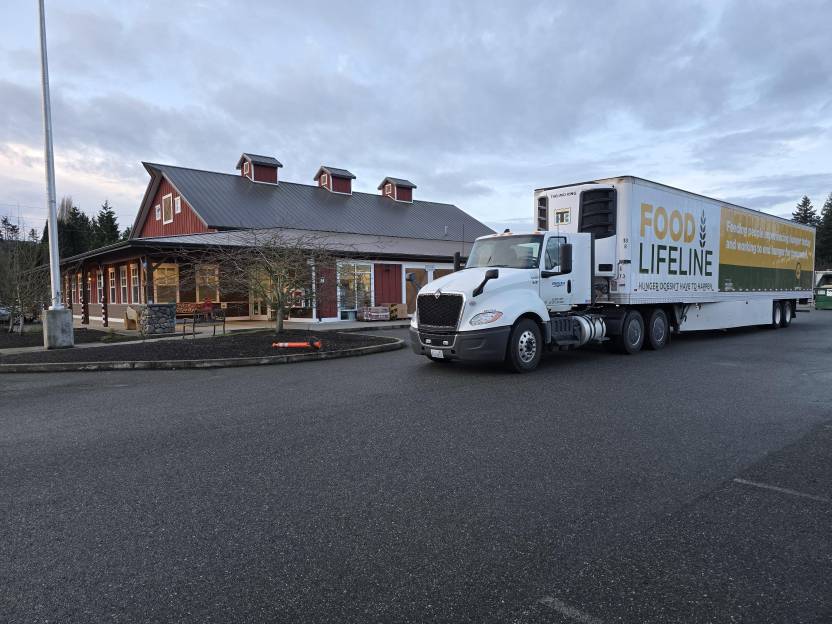
The Agency Programs Team was at the ready to coordinate additional food for them.
“Craig was able to step up and really get us more food to support that gap when we really, really needed it,” said Trisha, who worked closely with Craig Gibson, the Director of Agency Programs, to work out the logistics of getting additional food and supplies.
“He was available by email, phone, and text, which was really helpful because the times were not normal business hours since I was all over the place.”
Craig and his team strategized with the Food Resources and Operations Teams to swiftly get needed supplies to those communities in the impacted area.
“It was very empowering to be able to source and distribute needed items in real time to communities impacted by the historic flooding,” said Craig. “It’s often challenging for an organization of our size to be nimble, however in this instance teams and leaders across the organization worked in tandem to ensure we were well resourced even before requests for support came through. In a year where we have often been stretched beyond our capacity, it was very meaningful to partners when we showed up as a critical safety net in this emergency situation.”
As a member of the Feeding America national network, we were able to source a special distribution of donated disaster relief food and supplies to agency partners right when they needed it, including disaster meal kits prepared by Aldi, bottled water, and beverages.
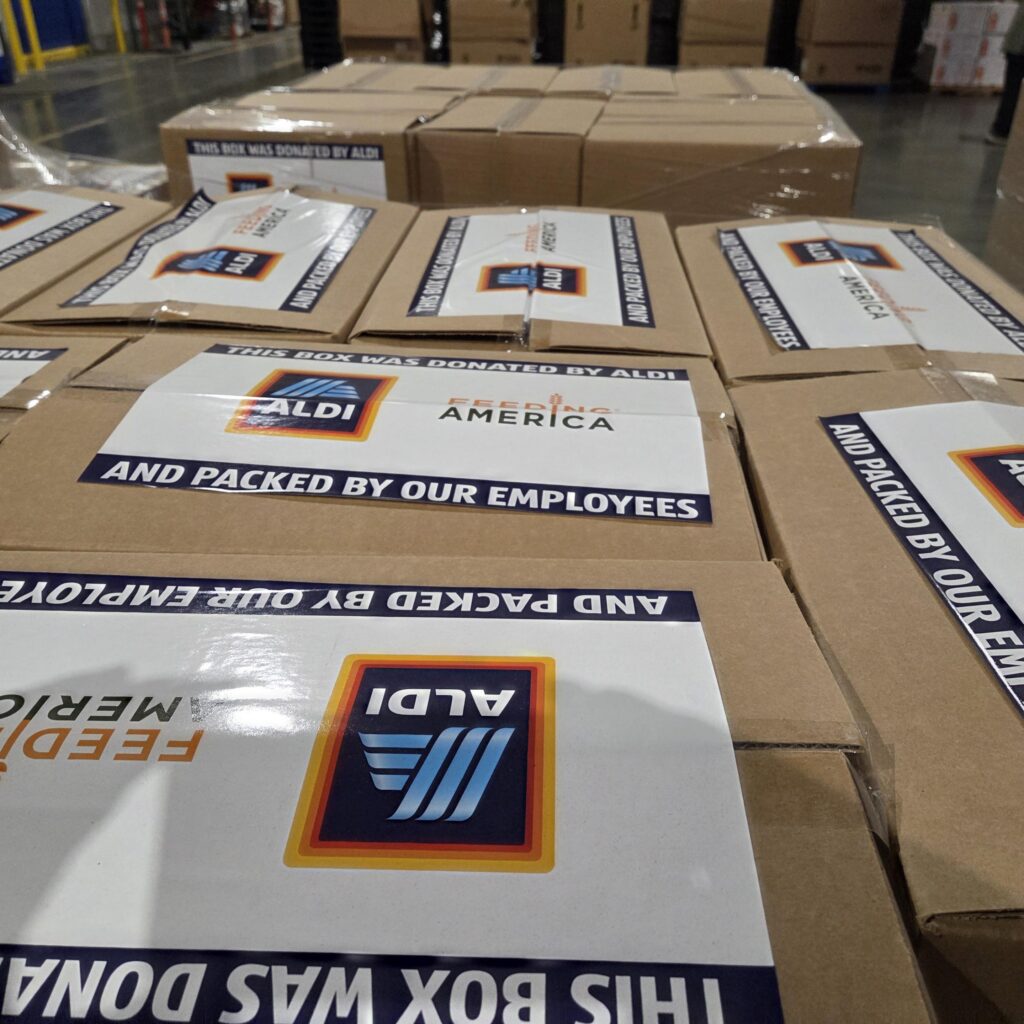
“Those meal kits are amazing because they have everything in it that they would need if their house was flooded,” said Trisha. “It’s got everything from the bowl and the spoon. And water. I’ve heard from quite a few people out there that they couldn’t use their well water.”
Agencies consistently identified ready-to-eat meals, bottled water, and cleanup and disaster kits as their top priorities. The Food Resources team reached out to vendor partners to assess donation availability and delivery timelines. Though generous donation offers were soon on the way, lead times made it clear that strategic purchasing was also necessary to meet the urgency of the moment. Food Lifeline quickly purchased 600 cases of bottled water, as well as shelf-stable, ready-to-eat foods including canned stew, chicken, red beans & rice, mini ravioli, and peanut butter.
These items were rapidly distributed to Skagit Valley and Helping Hands, providing crucial food and supplies for those already experiencing flood impacts.
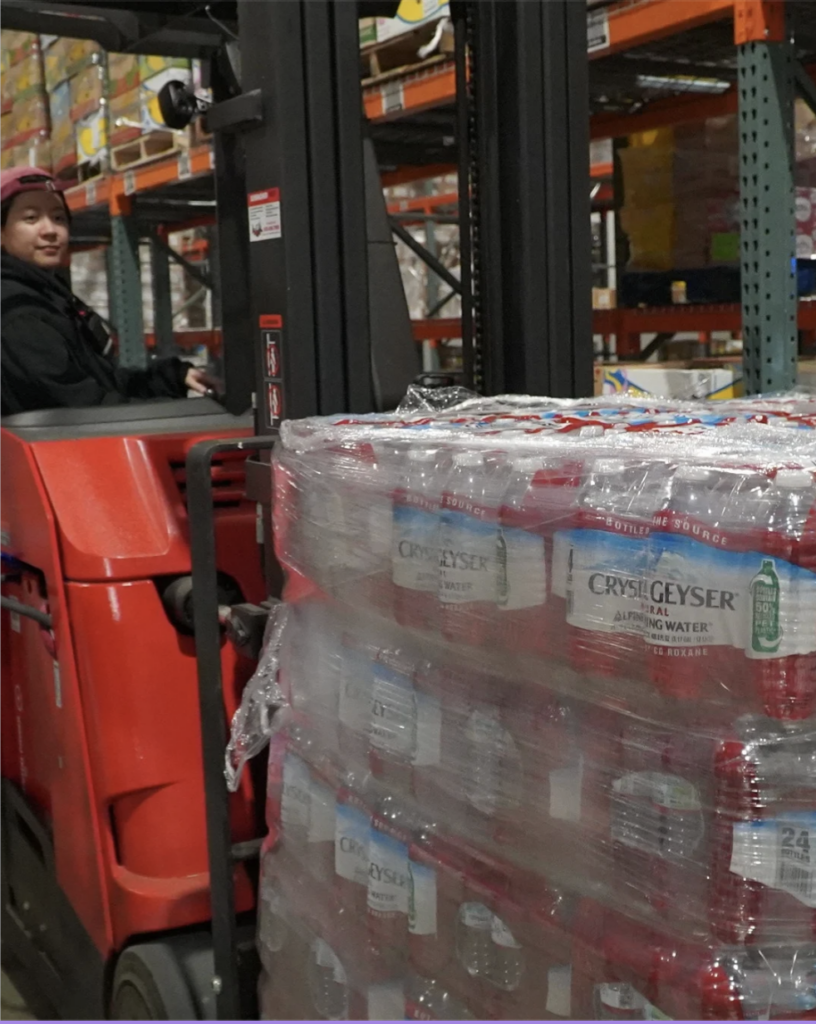
“Although this response came just weeks after Food Lifeline had already requested emergency donations related to the government shutdown and despite overlapping crises—including SNAP cuts, shutdown impacts, and flooding—communities, donors, and partners stepped up once again,” said Rashad Bell, Director of Food Resources.
“The response highlights the strength of community partnerships—across donors, vendors, food banks, and local organizations—working together to meet urgent needs at scale.”
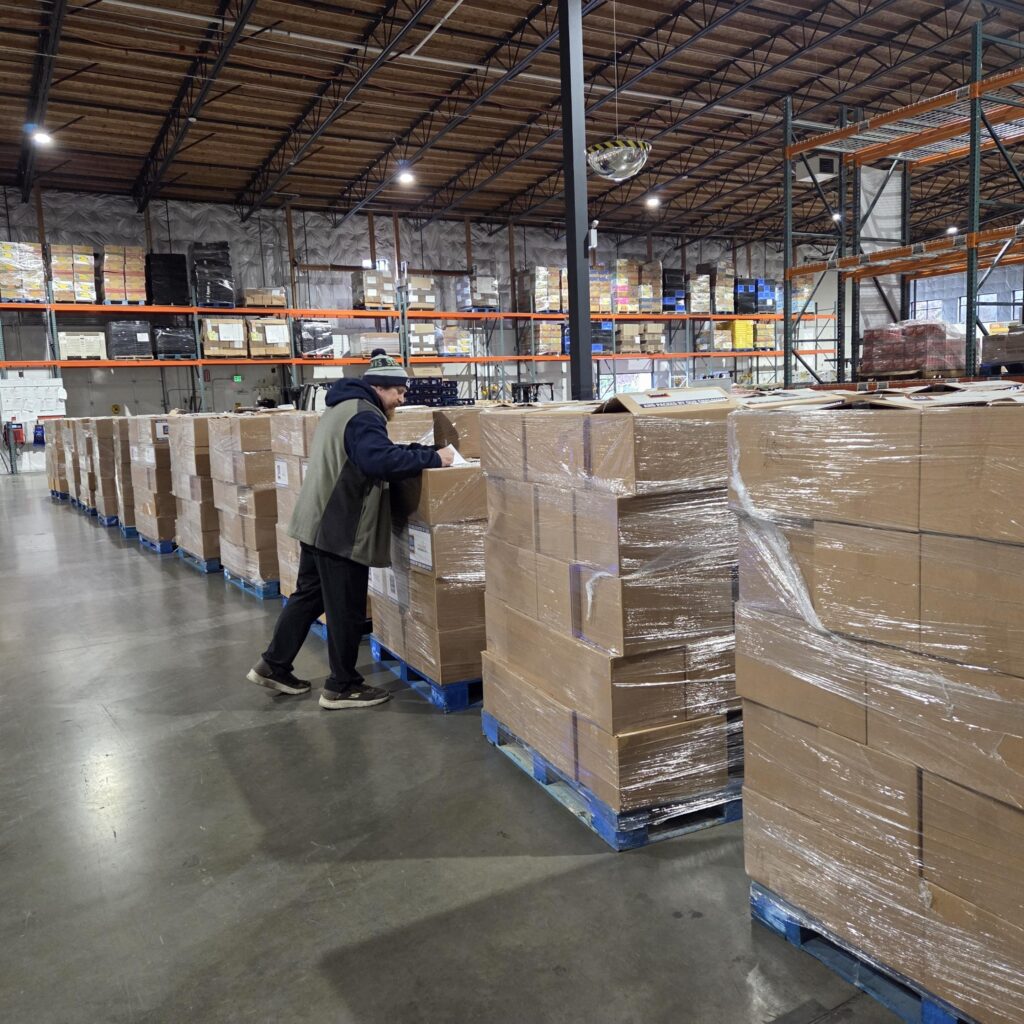
To provide much needed supplies, Jim Procopio, Director of Operations, and Russell Wilson, a Warehouse Associate, came in over the winter break to receive more emergency kits and supplies on New Year’s Eve, and to prepare orders to go out on January 2 to the agencies that were critically affected by the flooding.
“Our fleet of Drivers were unable to do some of their routes because of road closures caused by the flooding,” said Russell, who worked closely on flood distributions. “Logistically everything came to a halt in certain areas. So as waters started to recede many agencies were in dire need of resources in their communities.”
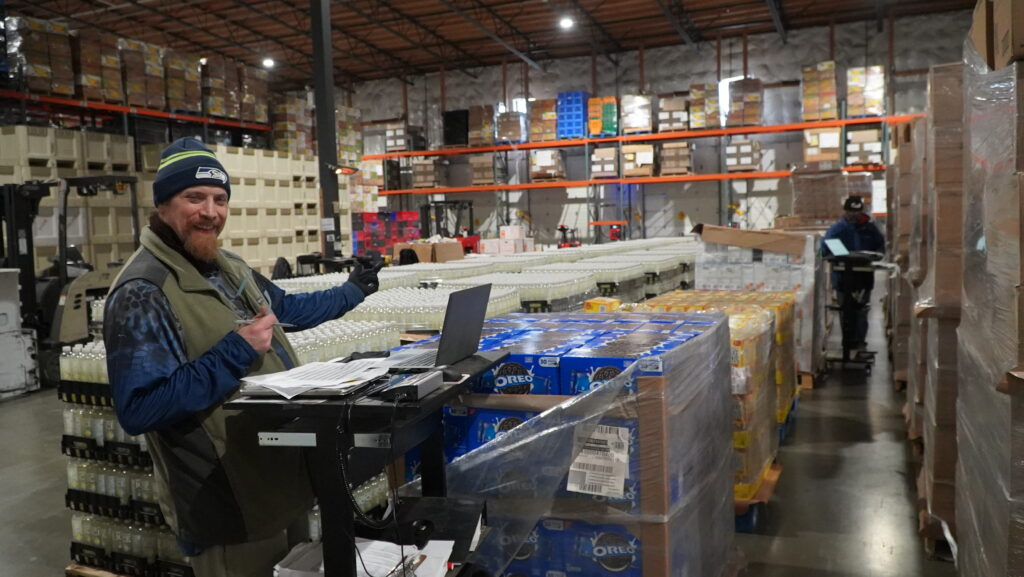
“It has been pretty amazing to see the outpouring of response by community and companies donating to our organization for emergency response. I’m glad to be working with such amazing people.”
-Russell Wilson, Warehouse Associate
Even weeks later, residual flood water and complications still remain. Some people needed to access food banks for additional supplies like diapers because closed roads meant they couldn’t get into town without a big truck.
All told, Food Lifeline sourced and received over 13,000 cases of bottled water; beverages, ready to eat meals and baby formula; 7,500 Personal Hygiene kits and period packs; 468 cleanup buckets; and 26 cases of T-shirts and socks.
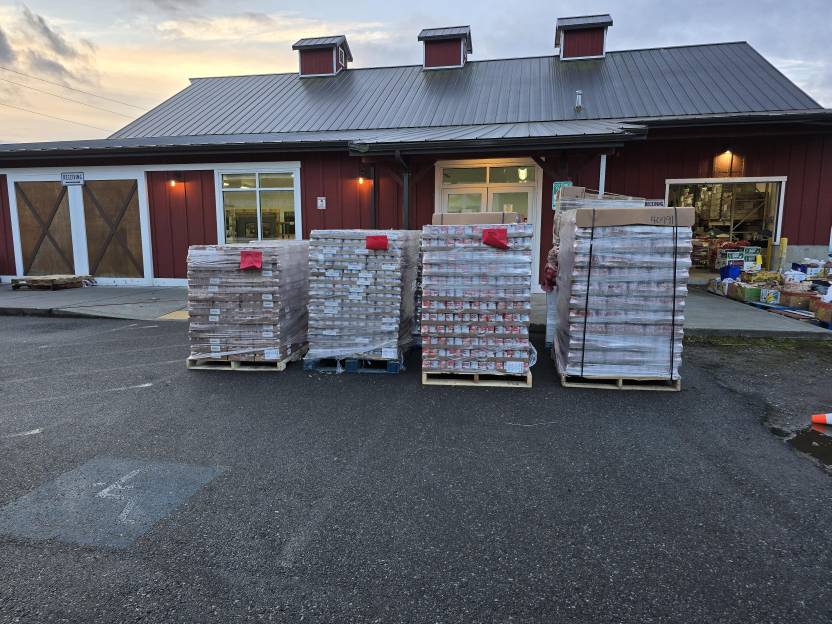
Coordinating with external organizations not just within the hunger relief sector, but across local government, nonprofit, and faith-based organizations was essential. The Washington Voluntary Organizations Active in Disaster (WAVOAD) provided critical updates on county-level conditions and response efforts.
Amythst Shipman, Director of Business Operations, said that the WAVOAD also helped us make critical connections with partner organizations.
“Through these connections, we identified food and supply needs for impacted families, helped two organizations secure safe parking for trucks carrying disaster supplies from across the state and country, and partnered with Disaster Assistance Centers (DACs)—pop-up resource hubs for affected households.”
All in all, we supported 5 DACs with food and supplies for distribution. We were also able to provide direct food and supplies to individual families who were referred to us because they still had unmet needs.
“It was meaningful to see the community come together—across sectors and roles—to support one another. It was a powerful reminder of how much strength and care show up when people and partners step in for each other.”
-Amythst Shipman, Director of Business Operations
Going forward, Food Lifeline will serve as distribution hub for disaster preparedness and relief for the Feeding America network. We are holding an inventory of the remaining bottled water, hygiene kits, clean-up supplies, and disaster meal kits that are ready to deploy locally for future emergencies and/or ship to other Feeding America food banks for their emergency response efforts.
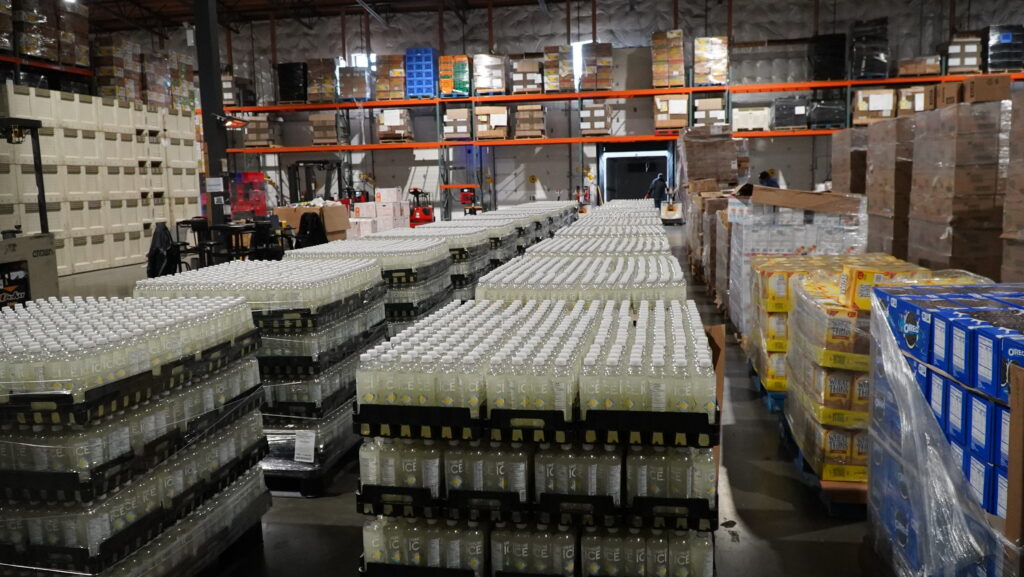
An emergency fundraising campaign helped make it possible to quickly purchase and distribute many of these essential items, supplementing the generous donations from companies across the region.
“Leveraging support from the community was critical,” said Gabriela Garayar, the Director of Development. “Food Lifeline is grateful for those who stepped up in the midst of the holiday season to support our neighbors and agency partners impacted by the floods. It truly takes the power of community to keep our neighbors nourished no matter what.”
Now that the floods have receded, communities have moved from emergency response to cleanup, recovery, and rebuilding. We’ll continue to meet with the emergency relief organizations to offer our help and support as community needs emerge during the recovery phase.
In the face of the floods, teams and community partners came together to act quickly–delivering care and support when it was needed most.