


Food Insecurity in Western Washington : What the Latest Map the Meal Gap Data Tells Us
Every year, Feeding America’s Map the Meal Gap study provides one of the most detailed pictures of food insecurity across the United States.
The latest Map the Meal Gap study helps us better understand where food insecurity exists across our region so we can respond with community-informed solutions – Every statistic represents a neighbor, a family, or a child.
Food insecurity exists in every community
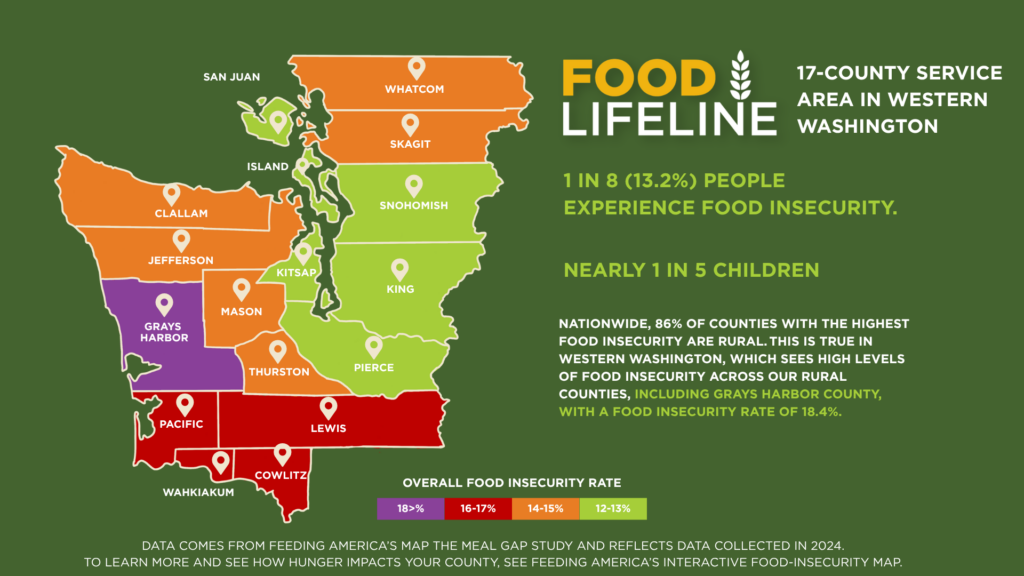
In 2024, an estimated more than 1 in 8 people and 1 in 5 children in Food Lifeline’s service area experienced food insecurity.
Food insecurity doesn’t look the same in every neighborhood, but it exists in every county we serve. The latest data show particularly high rates in several rural communities, including Grays Harbor County, where 18.4% of residents experienced food insecurity.
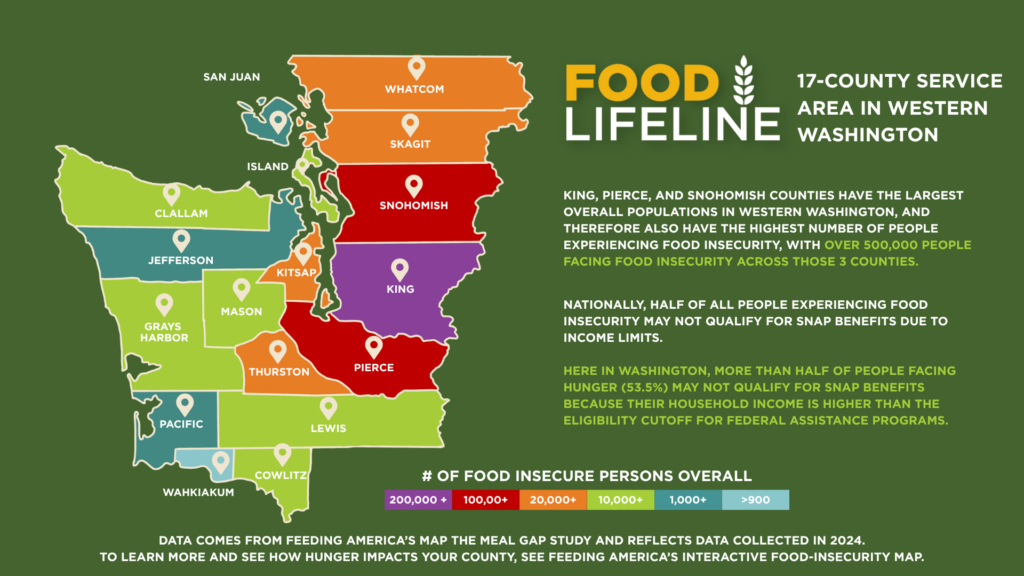
At the same time, King, Pierce, and Snohomish counties account for the largest number of people experiencing food insecurity due to their larger populations. Together, more than 500,000 people across these three counties experienced food insecurity in 2024.
What the data tells us
Food insecurity is driven by many factors, including the rising cost of housing, groceries, healthcare, transportation, and other basic necessities. Unexpected life events such as job loss, illness, or emergency expenses can quickly make it difficult for families to consistently afford nutritious food.
The data also show that food insecurity does not affect all communities equally. Across Western Washington, communities of color experience disproportionately higher rates of food insecurity:
- 31% of Black individuals experienced food insecurity.
- 22% of Latino individuals experienced food insecurity.
- 11% of White individuals experienced food insecurity.
These disparities reflect longstanding inequities that affect access to affordable housing, healthcare, employment opportunities, transportation, and nutritious food. This year’s Map the Meal Gap report shows that many people experiencing food insecurity may not qualify for SNAP benefits, including working individuals and families who continue to face rising grocery and household costs.
Serving neighbors across Western Washington
Food Lifeline partners with more than 315 food banks, shelters, meal programs, and community organizations across Western Washington to connect neighbors with nutritious, culturally relevant food.
We are committed to showing up for our neighbors today and building a future where everyone has access to the food they need to thrive. Your support makes this work possible. Whether you donate, advocate, or volunteer, every contribution helps strengthen our community and expand access to food across Western Washington.
Explore the data
Explore the interactive map from Feeding America to see how food insecurity impacts your community and learn more about how Food Lifeline is working alongside partners across Western Washington to build better food security system.