Ferndale Food Bank – Building A Community Store
Innovation is an important key to progress, even in the toughest times.
As food insecurity continues to grow in Western Washington, many food banks are answering the call by finding new and effective ways to meet the need. One unique strategy is helping create food justice using a familiar blueprint: the traditional grocery store.
Even the smallest towns in Western Washington are now listening to their guests and creating “grocery store” models to help make the food bank experience more equitable, effective, and, ultimately, more familiar.
Ferndale, Washington, has a modest population of roughly 15,000. But like many communities, the cost of living has risen dramatically, and the town has seen a 20% increase in underemployment. Today, one in five people in Ferndale now experience food insecurity.
“In the past three years, our food purchase budget has increased by 200%,” says Ferndale Food Bank Executive Director Sierra Crook. “It’s been a struggle.”
The food bank serves anyone who lives in Whatcom County, so its numbers far exceed what you might expect for a small town. Every week, 50 volunteers and three employees serve as many as 2,500 guests. Last year, the food bank served 7,000 different people.
But even with the pressure of increasing visits, the Ferndale Food Bank has created its new grocery store model in response to its guests’ voices and needs.
“It was a combination of feedback from our shoppers requesting more choice and specifications directly, as well as having a consistent stream of returns of foods during distribution days as indirect feedback,” says Crook. “Additionally, did a lot of research and saw the dramatic client satisfaction rate increases in conversions to shopping models at other food banks.”
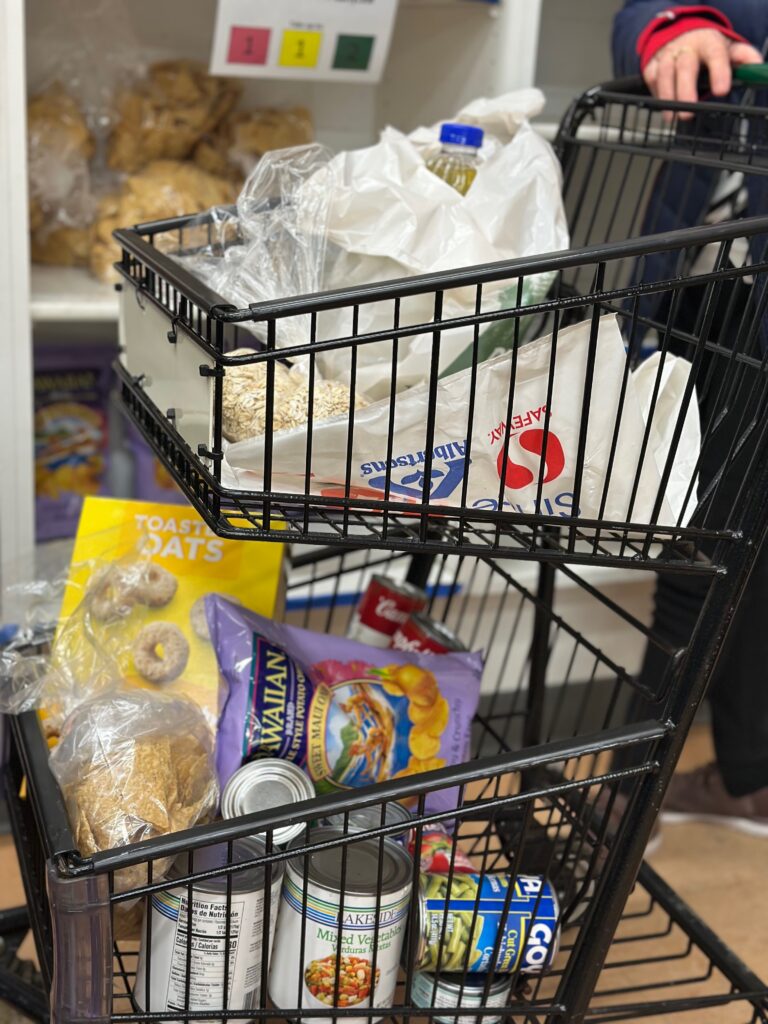
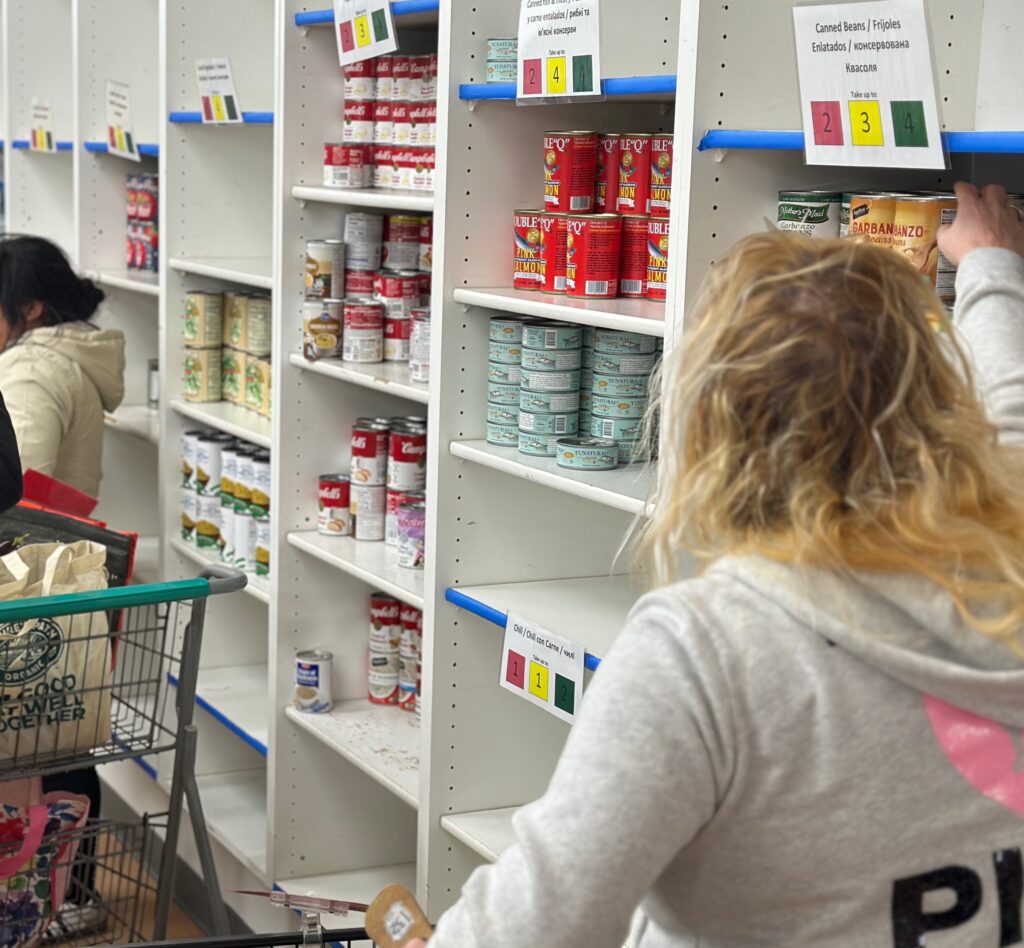
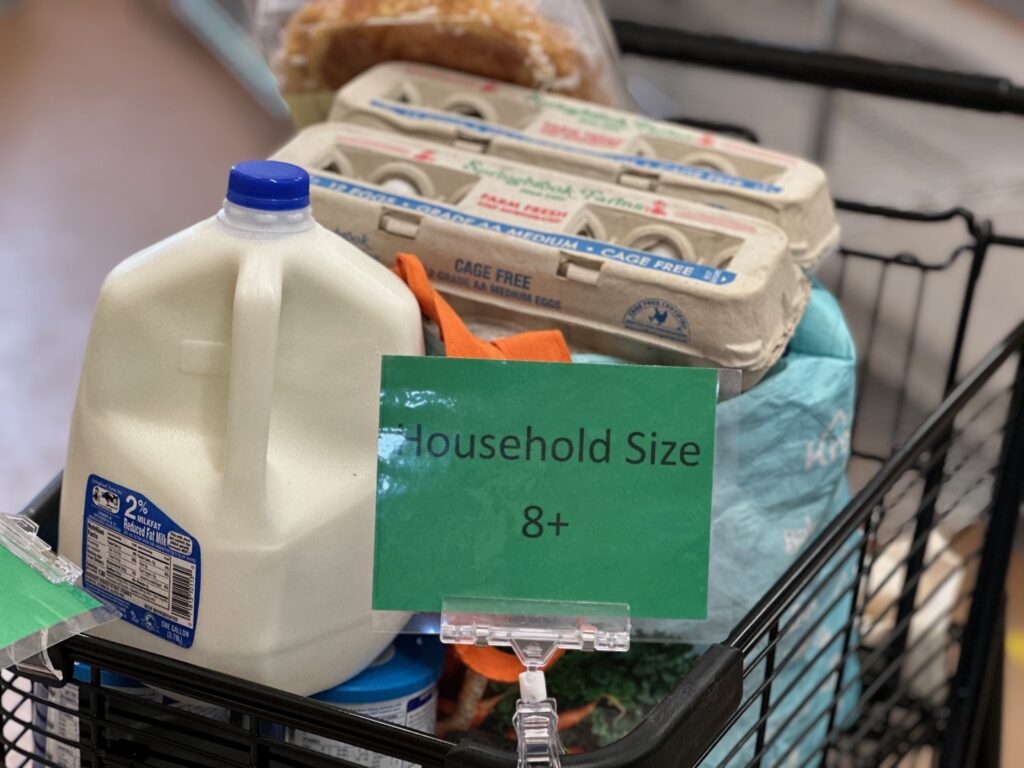
Under the ‘grocery store” model, guests now literally “shop” the shelves themselves. As they shop, they receive more personal attention from staff and volunteers, have more choice in the foods offered, and are empowered to take home the food they need to nourish their bodies and spirits.
“Before, we were offering a hybrid model,” says Crook. “Guests could shop the produce, but they would fill out a slip for everything else. But there were so many micro-decisions we found our volunteers were making on behalf of folks. Things like what type of peanut butter people like or the specific type of bread that folks want.”
In addition to empowering guests, Crook says the new model also provides some important benefits for her team.
“The first is direct feedback from shoppers on what they want. Now, we can see that nobody’s touched a certain item in a while, and that’s relevant information. People are giving us direct feedback on what they’re looking for.”
The second benefit is more personal.
“There’s an increased feeling of just humanization into the process at this food bank, of increased dignity and empowerment. Yes, for the shoppers, as they come in now and select their own food. But we’ve also gotten feedback from volunteers who say, ‘Before, this person was just a name on a piece of paper to me, and now I know who they are. I know their face. I know about their lives. I know what’s going on in their world.’ That extra humanization inserts dignity in the process that just wasn’t there before.”
-Ferndale Food Bank Executive Director Sierra Crook
The new model has been well received by guests and has even increased visits to the food bank.
“We just did client surveys, and we’ve seen that we had 18% of new clients in the last three months who have shown up because of the model change,” says Crook. “And we’ve seen about a 20% increase in client satisfaction overall from previous surveys, and the biggest jumps in clients in underserved populations was for satisfaction because of that extra layer of dignity.”
But it might also be the direct feedback that guests are able to give food bank staff and volunteers that is the most impactful. Particularly when it comes to underserved populations and providing culturally relevant foods.
“Before, we may have purchased a certain type of rice because it’s the cheapest. And then we notice that week nobody takes it. And so, we recognize this isn’t useful to people. So, how do we adjust? We now ask for information on what type of rice they would actually use. Instead of a brand that nobody wanted.”
The Ferndale Food Bank still has some work to do—more walls to move and more spaces to create. But today, the work continues with humanity and a deep belief in food justice.
“I think if we can establish that everyone deserves the right to have access to healthy, good food if we don’t treat how people get that food any differently from one another, it makes the playing field equitable. And I think the idea of someone walking away from a food bank experience saying, ‘Oh man, I didn’t even feel like I was at a food bank.’ That should be the goal.”
-Ferndale Food Bank Executive Director Sierra Crook