


Celebrating Farmer Jim, the Heart of the Food Bank Farm
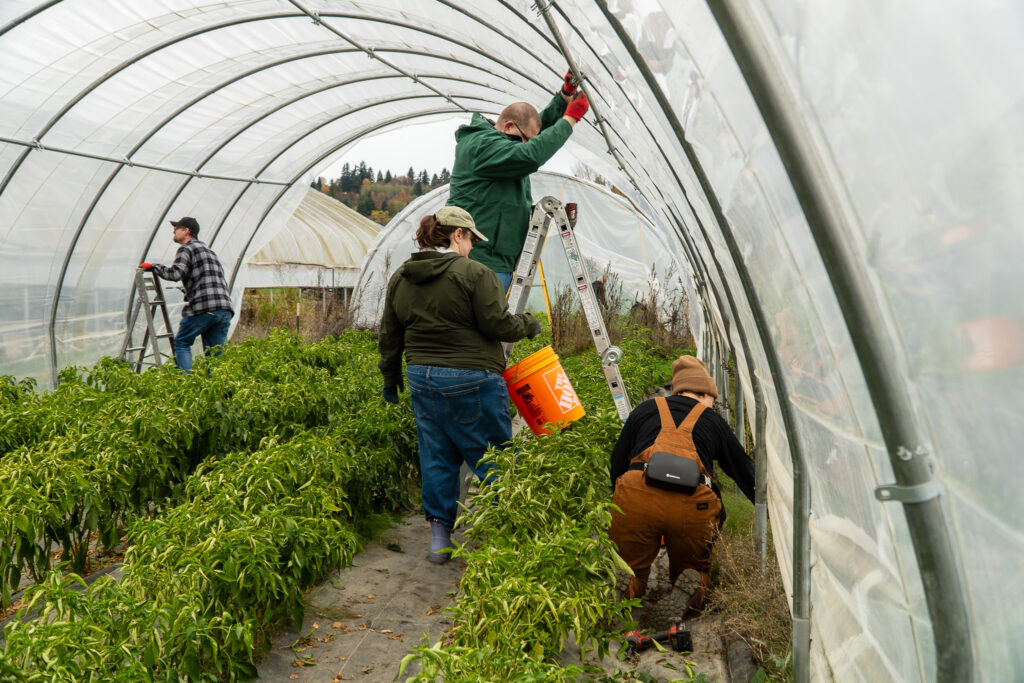
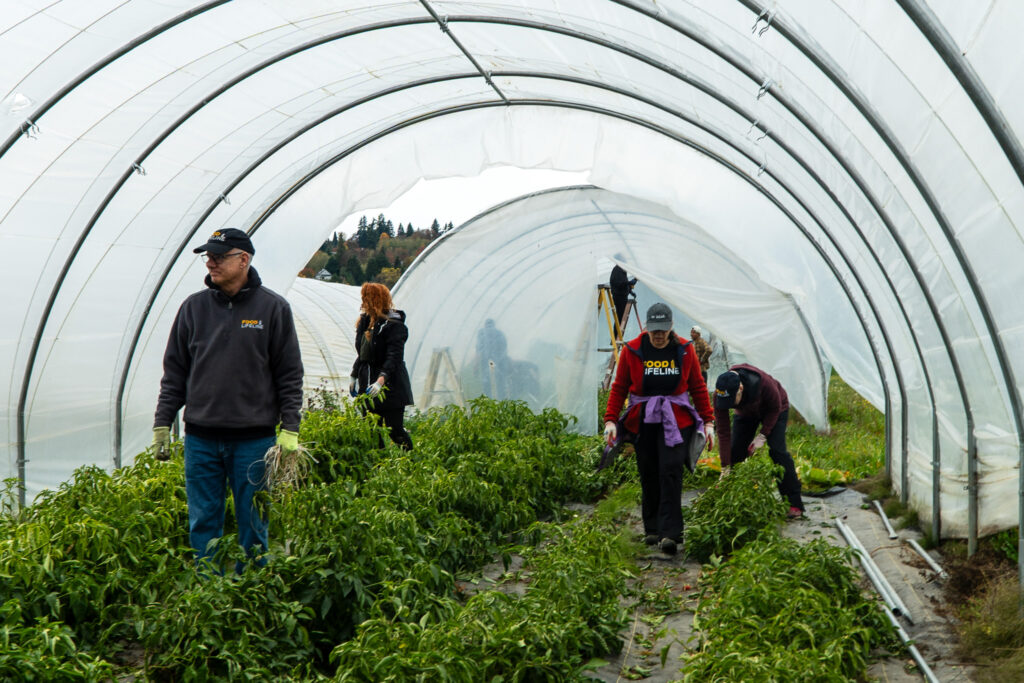
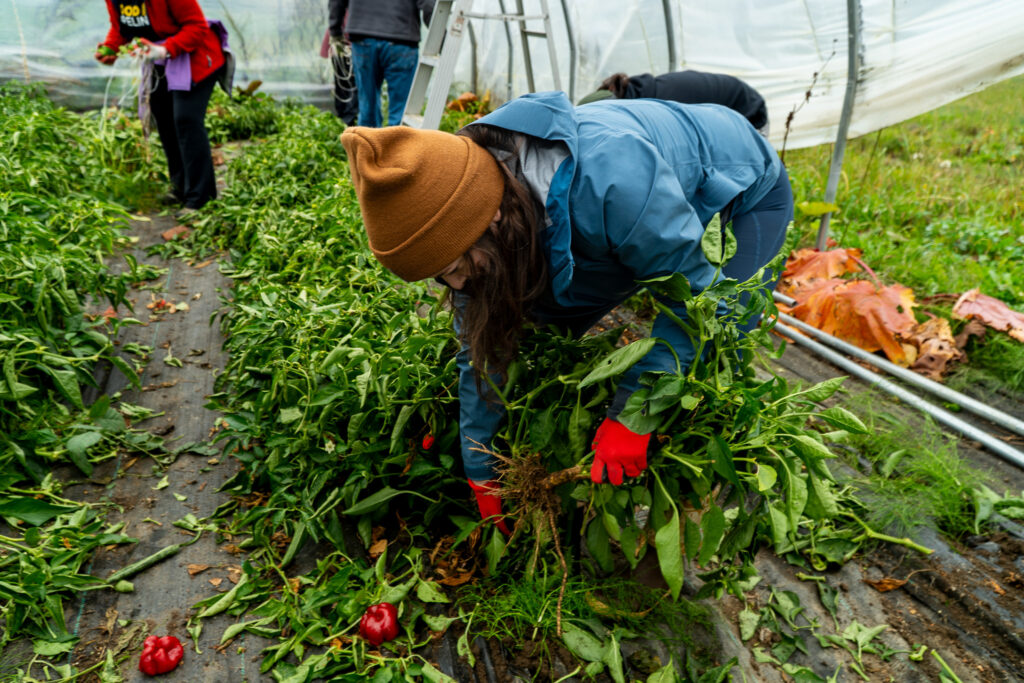
On a November morning, a few dozen Food Lifeline employees gathered in a grow tunnel to watch Jim Eichner demonstrate how to remove pepper plant stakes, the first step in dismantling the greenhouses before flood season. Nestled in the Snohomish River Valley, the Food Bank Farm was started by Jim in 2012 as a completely volunteer-run farm growing fresh produce for food banks. In the years since, it has delivered more than 2 million pounds of vegetables to Food Lifeline alone.
As the growing season came to a close, Food Lifeline staff were joining Jim at the farm for a special volunteer session to celebrate his retirement and his remarkable contribution to the community over the past 14 years.

The idea for the Food Bank Farm came to Jim Eichner in 2009. An Episcopal Minister who now goes by both Father Jim and Farmer Jim, he spent the summer of his sabbatical that year at Jubilee Farm, a Community Supported Agriculture Farm, and worked with Eric Hakinson.
“I had grown up farming, so this… just primed all of the best days of my childhood to be driving a tractor and just spending the day at the farm, and then in the afternoon I’d come home and get the kids, we’d go down to the Snohomish River and go swimming in Duvall. It was just an idyllic summer of sabbatical, and I came out of that going, we could we could grow some food.”
The thought was a calling for Jim.
“Once you know you can do something, then you have sort of a moral question in front of you, like, well, why don’t you do something if you can? And so I started workshopping it from there.”
Driven by a deep empathy for what it feels like to be hungry, he wanted to find a way to provide more fresh produce for people.
“It’s easy to imagine how irrational you become when you get hungry, and then how if you have so many hungry days in your life or your year or your month, how that’s going to really restrict your ability to thrive.”
Because he grew up farming, he had a wealth of knowledge to draw from to help the farm take root. But he also found that once he started taking steps to create the farm, the entire community came together to support his dream.
“I’ve learned that I don’t have to do this all by myself…There’s a host of help on all sides.”
-FatherJim Eichner
A neighbor farmer offered land to use, someone else fixed his tractor, other farmers offered all kinds of support, and volunteers began showing up. His calling to grow food for his neighbors seemed to take on an energy of its own.
“It’s a very intangible thing, but you feel it in the whole organization, the Food Bank Farm. The money comes easily, the volunteers come easily, the land is generous and this has not been a hard thing to do since 2012…There’s an energy that goes that way.”
As if to underscore this point, the staff dismantling the greenhouses kept discovering ripe peppers on the plants, filling several bins with produce, even at this tail end of the growing season.
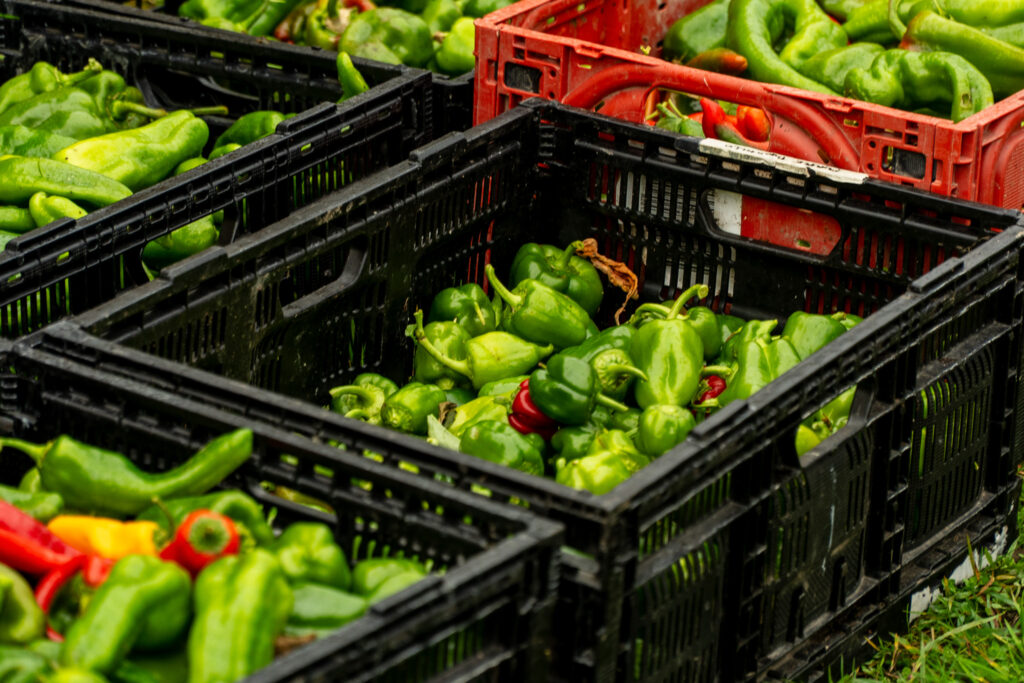
Over the years, Jim has worked closely with Food Lifeline to grow the produce most needed, including enormous amounts of culturally relevant crops like Napa cabbage and bok choy.
“It’s been a sort of a cycle going back and forth and back and forth in a constant dialogue each season with Food Lifeline.”
As Jim retires, he’s still thinking about ways to expand food production to ensure everyone has plenty of fresh produce. He says farmers love the gleaning that he’s been part of recently and he would love to see some type of gleaning organization. He likes the idea of asking farmers to plant an extra row that volunteers could help harvest at the end of the season.
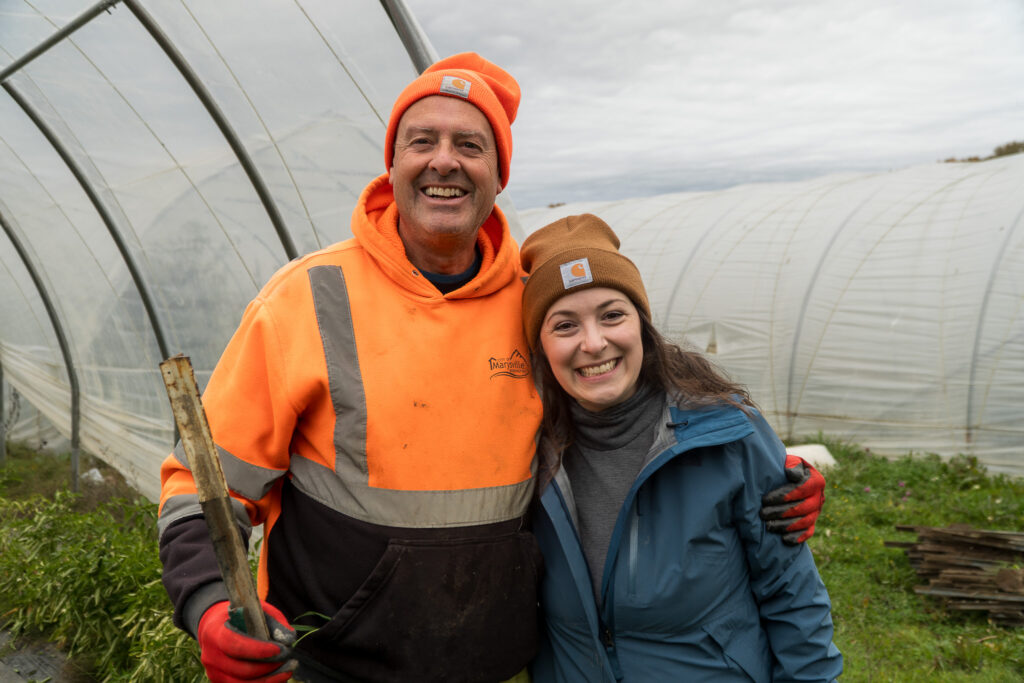
He advises others endeavoring to grow food for their community to take it one step at a time, and make sure you accept help from others.
“Don’t worry about what impact you’re going to make on society or anything. Just put one foot in front of the other foot and ten years later it’ll be a million pounds of something. But don’t even worry about that. Just put one foot in front of the other and plod along, and listen to all of the people around you because they’re all pulling for you. They’re glad to help you succeed.”
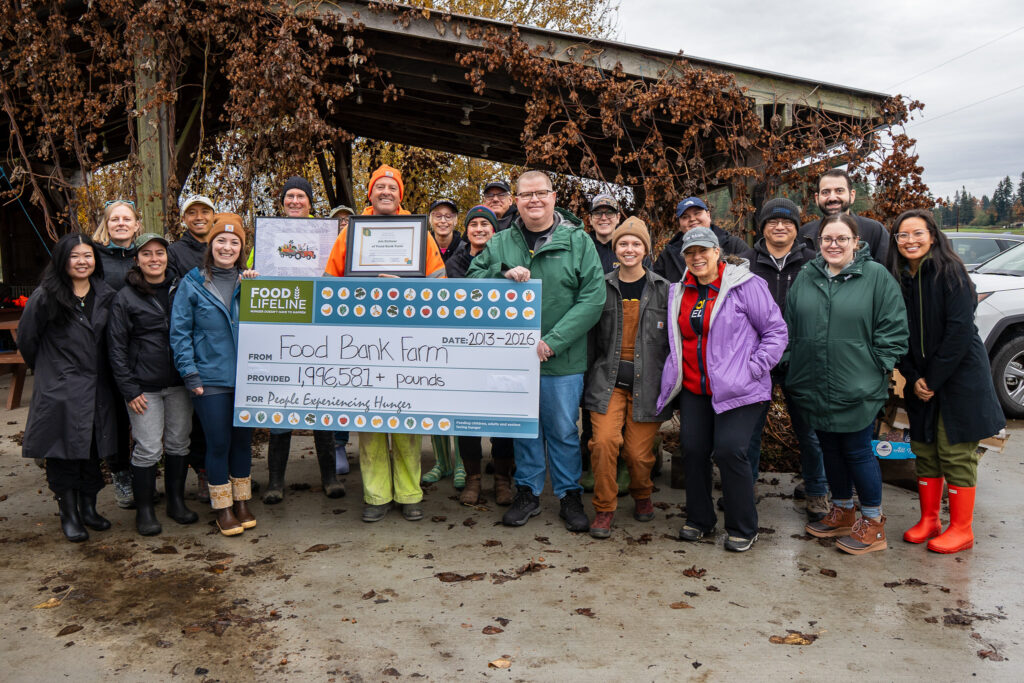
Words of thanks from Food Lifeline Staff:
We’re excited that he is heading into retirement and we will be thinking of him as he goes off to new adventures. And we look forward to sustaining this work years to come and continuing to build on his legacy. So all of us at Food Lifeline are just incredibly grateful for all that Farmer Jim has done for the community and for all of us.
–Tiffani Kaech-Freet, Food Lifeline’s Chief Programs Officer
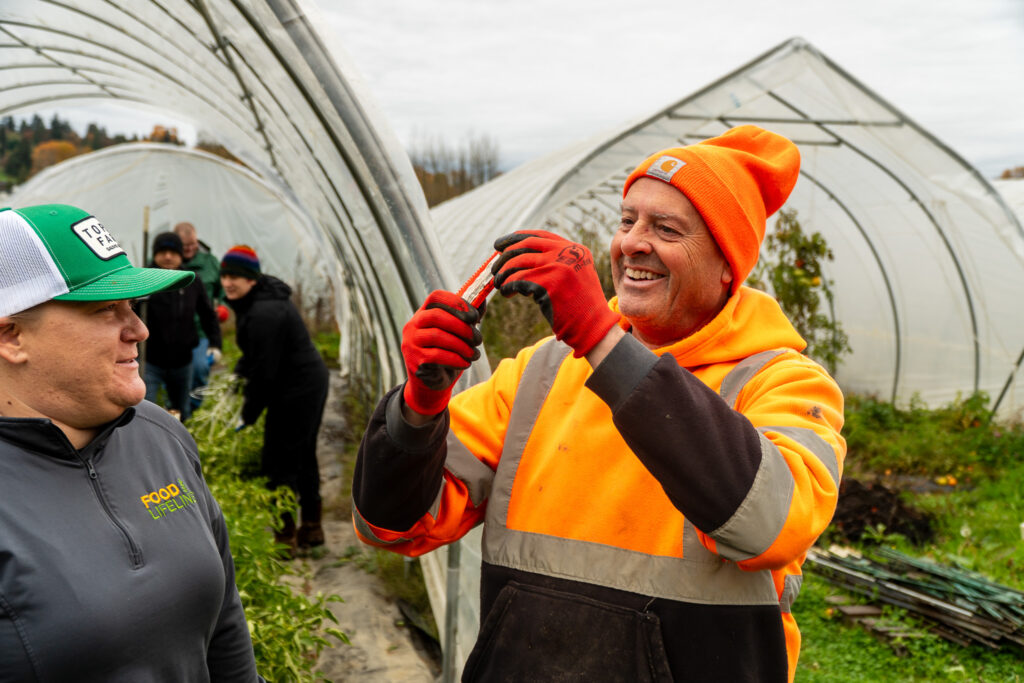
“It’s been a true honor working with Farmer Jim for this almost seven years now since I started. It’s been the highlight of my time at Food Lifeline, and I’ve just been so amazed by what he’s done and all the work and tireless dedication and just commitment to feeding people and leading volunteers here every week, both planting and harvesting and just the partnership that we’ve had over these years has been really incredible, and we’ve fed so many people with farm fresh produce.”
–Hannah Lertola, Food Lifeline’s Food Sourcing Specialist
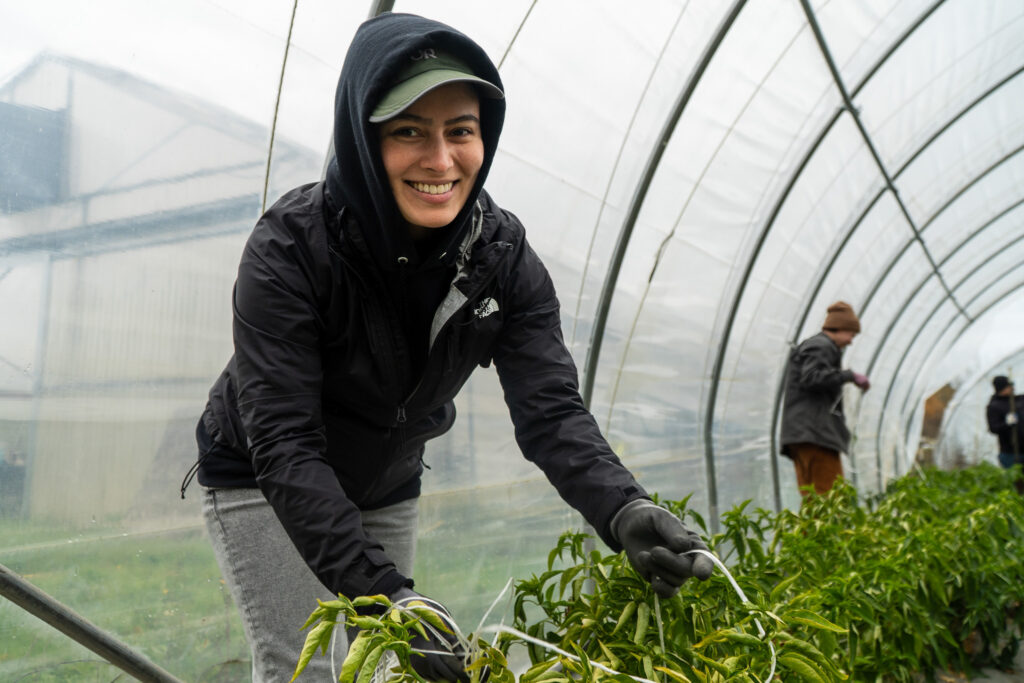
“Any time that I’ve had the privilege of bringing the produce that we’ve grown on the farm to community members through our mobile distributions, people are always so excited to be receiving stuff that looks so beautiful. They know it was grown and harvested maybe just days before. So I’m always proud to say, hey, this came from this this farm. And he’s growing it for the community.
–Leah Rapalee, Food Lifeline’s Manager of Strategic Initiatives
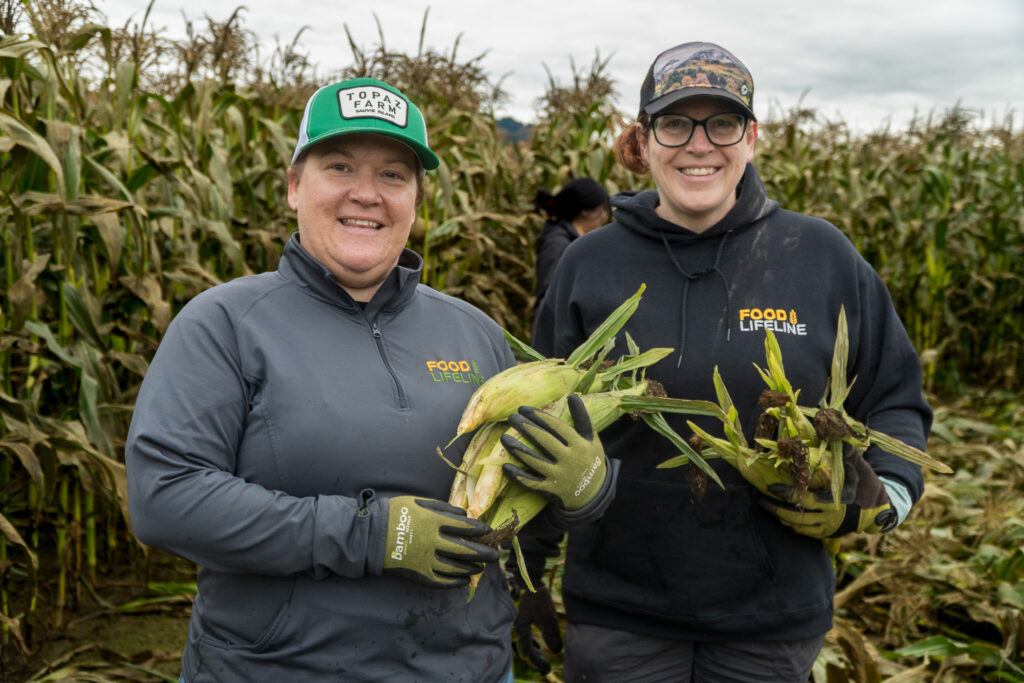
“I tell my volunteer teams about him every chance I get that this guy is running this 20-acre farm and putting out so much produce all for the benefits of food banks. It’s very inspiring, very humbling. I mean, running a farm is hard, right? There’s always things to do sun up to sundown. It never stops. And he’s doing it all for the good of the community and food banks.”
–Kevin Fisher, Food Lifeline’s Volunteer Production Coordinator